 TM Hydraulic
Top 10 Hydraulic Test Point Manufacturers in China?
Choosing a Hydraulic Test Point manufacturer in China requires more than comparing catalog prices. These small components connect gauges, sensors, and diagnostic equipment to pressurized hydraulic circuits. Their thread accuracy, sealing quality, material strength, and contamination control can affect an entire machine.
Anthony Esposito, a respected hydraulic engineering author, offers a useful reminder: “Reliable hydraulic testing begins with accurate measurement at the right point.” This principle guides our review. The selected manufacturers are assessed through practical criteria, including production experience, machining capability, pressure ratings, connection standards, quality documentation, and after-sales support. A test point should not merely fit a port. It should withstand repeated connection cycles beside a vibrating pump, without leaking oil or damaging the measuring hose.
Details matter.
This guide examines ten Chinese manufacturers serving mobile equipment, industrial machinery, energy systems, and fluid-power distributors. It considers whether each supplier provides stainless steel and carbon-steel options, protective caps, diagnostic hoses, and customized threads. Factory certifications are useful, but they do not replace sample testing, traceability checks, or direct technical communication. Some companies present stronger export records, while others may offer better flexibility for smaller orders.
The ranking is not flawless. Product lines change, and published specifications can be incomplete. Buyers should confirm current test reports, working pressures, temperature limits, and applicable standards before purchase. Our aim is practical clarity: helping engineers, distributors, and procurement teams identify credible partners for safe, repeatable hydraulic diagnostics.
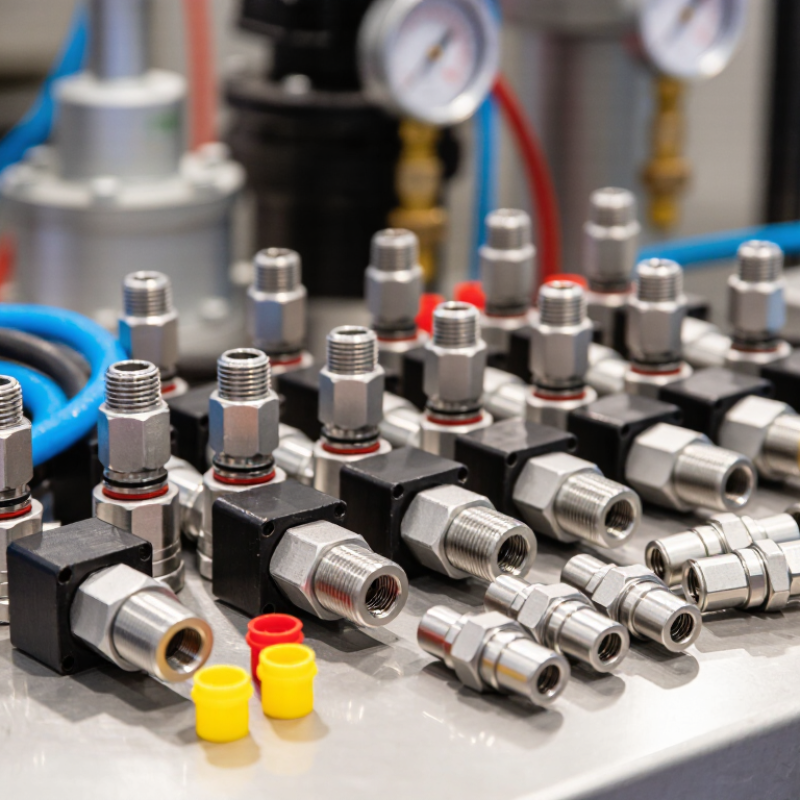
Hydraulic Test Points in China: Types, Functions, and 400-bar Ratings
Hydraulic test points are small access ports used to check pressure without dismantling a hydraulic circuit. In China, manufacturers commonly produce screw-in, panel-mount, hose-connected, and multi-function test points. Each type serves a different installation need. Screw-in models suit compact manifolds. Panel-mount designs improve access on machines with protective covers. Hose-connected versions support temporary measurements during commissioning and maintenance.
Their main function is simple: connect a pressure gauge, sensor, or diagnostic hose safely and quickly. A good test point should resist vibration, oil leakage, and repeated connection cycles. Common materials include carbon steel, stainless steel, and corrosion-resistant surface treatments. Seal selection also matters. Nitrile suits many mineral oils, while fluorocarbon seals handle higher temperatures and demanding fluids. This detail is often underestimated.
Many Chinese suppliers offer test points rated at 400 bar, but the rating alone proves little. Buyers should check burst pressure, temperature range, thread accuracy, sealing method, and compatibility with the hydraulic medium. Actual working pressure should remain below the stated limit, especially under pressure spikes. In field inspections, damaged caps and contaminated connectors appear more often than expected. A clean protective cap is not decoration. It prevents dirt from entering the measurement path. One practical weakness remains: product catalogs may simplify testing conditions, so independent verification is still wise.
Top 10 Hydraulic Test Point Manufacturers in China? — Hydraulic Test Points in China: Types, Functions, and 400-bar Ratings
The table below compares common hydraulic test-point configurations and selection criteria. A 400-bar rating is product-specific: confirm the working-pressure rating, test conditions, and compatible connection in the relevant datasheet before use.
| No. | Test-point configuration | Typical function | Connection / interface | Pressure-rating note | Selection and use considerations |
|---|---|---|---|---|---|
| 1 | Screw-in test point with protective cap | Routine pressure checks and connection of a test hose | Threaded body; thread form and size vary by model | 400 bar models are available; rating must be verified for the exact model | Match the port thread, seal type, and working pressure to the system. |
| 2 | Minimess-style diagnostic test point | Quick connection for pressure measurement and diagnostics | Probe-style coupling; confirm compatibility with the measuring hose | Pressure capacity depends on the test point and mating connector | Check the complete connected assembly, not just the test-point body. |
| 3 | M16 × 2 test point | Pressure measurement at a prepared diagnostic port | M16 × 2 metric thread, where specified by the manufacturer | Do not infer a pressure rating from the thread size | Verify thread pitch, sealing arrangement, and port standard before ordering. |
| 4 | Test point with hose connection | Remote gauge or sensor connection where direct access is limited | Test-point interface plus a specified hose-end coupling | The lowest-rated component governs the assembly limit | Use a hose and coupling rated for the intended pressure and fluid. |
| 5 | Panel-mount test point | Provides an accessible diagnostic connection through an enclosure or panel | Panel fixing plus a hydraulic port connection | Confirm both pressure rating and panel-mount dimensions | Allow space for safe coupling access and protective-cap removal. |
| 6 | Test point with dust cap or tethered cap | Protects the interface from dirt when not connected | Cap style varies; it does not define the hydraulic connection standard | The cap is not a substitute for the pressure-rated test-point body | Select a cap suited to the operating environment and maintenance routine. |
| 7 | High-pressure test-point assembly | Measurement on circuits requiring a higher specified working pressure | Specify the port, mating connector, and test hose as a matched set | A 400-bar working rating must be stated for the exact assembly configuration | Check pressure peaks, temperature limits, and any applicable safety factor. |
| 8 | Stainless-steel test point | Diagnostic access where corrosion resistance is a material consideration | Thread and coupling options depend on the design | Material alone does not establish a pressure rating | Confirm fluid compatibility, seal material, and the specified pressure rating. |
| 9 | Test point for a multi-station diagnostic block | Provides measurement access at multiple circuit locations | Ports and station layout are determined by the block design | Check the rating of each port and the complete block | Label measurement points clearly to support repeatable troubleshooting. |
| 10 | Replacement test point for an existing system | Restores a diagnostic connection during maintenance or component replacement | Must match the original thread, sealing method, and coupling interface | Use the system requirement and replacement part datasheet to confirm suitability | Depressurize the circuit and follow the equipment maker’s service procedure before replacement. |
Rating note: 400 bar equals 40 MPa. Always verify whether a published value is a working-pressure, test-pressure, or burst-pressure figure; these terms are not interchangeable.
FAQS
Request monthly output, lead times, and available pressure-test stations. Ask whether capacity reflects normal production or a temporary peak.
No. It indicates a quality-management system, not product performance. Request material certificates and traceable inspection records for the specific product.
HS 8412 trade data covers broad hydraulic machinery, not test points alone. Treat it as context and request redacted shipment records where appropriate.
Check pressure rating, connection thread, seal material, and protective cap. For dusty equipment, a recessed port and tethered cap can help.
Ask for pressure-cycle conditions, temperature range, and seal compatibility. There is no universal life figure. Test a sample on the intended machine.
Request separate estimates for samples, stocked parts, and custom machining. Confirm the exact configuration in writing; separately sourced seals may cause delays.
Check thread gauges, sealing-surface finish, and inspection records. Small details matter. I could still miss an awkward installation issue.
No. Broad hydraulic equipment figures describe the wider sector, not test-point service life or a supplier’s sales volume.
Conclusion
This guide presents a practical overview of Hydraulic Test Point solutions manufactured in China, covering common types, operating functions, and pressure ratings up to 400 bar. It explains how test points support pressure measurement, system diagnostics, maintenance, and safe hydraulic commissioning. The article also compares leading domestic manufacturers by production capacity, certification coverage, export experience, and quality-control practices, without focusing on any specific brand.
A technical comparison examines pressure and temperature limits, material options, sealing performance, connection designs, and acceptable leak rates. It also reviews the relevance of ISO 4413, ISO 8434, DIN 2353, and applicable GB/T requirements. Finally, the selection guide considers application conditions, expected service life, delivery schedules, minimum order quantities, documentation, and after-sales support, helping buyers choose reliable components for industrial machinery, mobile equipment, energy systems, and other hydraulic applications.
