Selecting the right Hydraulic Test Point Hose supplier affects pressure readings, service speed, and operator safety. A weak hose can leak beside a test port, distort results, or fail during routine diagnostics. The details matter.
Brendan Casey, a recognized hydraulic machinery specialist, has repeatedly stressed, “The number one cause of hydraulic system failure is contamination.” His warning applies directly to test hoses. Clean fittings, sealed couplings, and protected caps are not minor accessories. They prevent dirt from entering sensitive hydraulic circuits. A dependable supplier should provide traceable materials, pressure ratings, temperature limits, and clear compatibility guidance. Certification matters, but practical evidence matters too.
This guide examines leading suppliers through an engineer’s lens. It considers hose construction, connection standards, impulse resistance, delivery capability, customization, and technical support. It also asks uncomfortable questions. Does the supplier publish complete specifications? Can it support urgent maintenance? Are replacement parts consistently available? Marketing language alone is insufficient.
Field experience often reveals what catalogs hide. A hose may meet its rated pressure yet perform poorly after repeated bending. A compact assembly may fit perfectly but become difficult to inspect. These small compromises can increase downtime. No supplier is perfect. That is worth admitting.
The strongest candidates combine dependable manufacturing with responsive advice. They help users choose the correct length, bore, end connection, and pressure class. They also explain limitations instead of promising universal compatibility. This comparison aims to make that evaluation clearer, more practical, and less dependent on attractive claims.
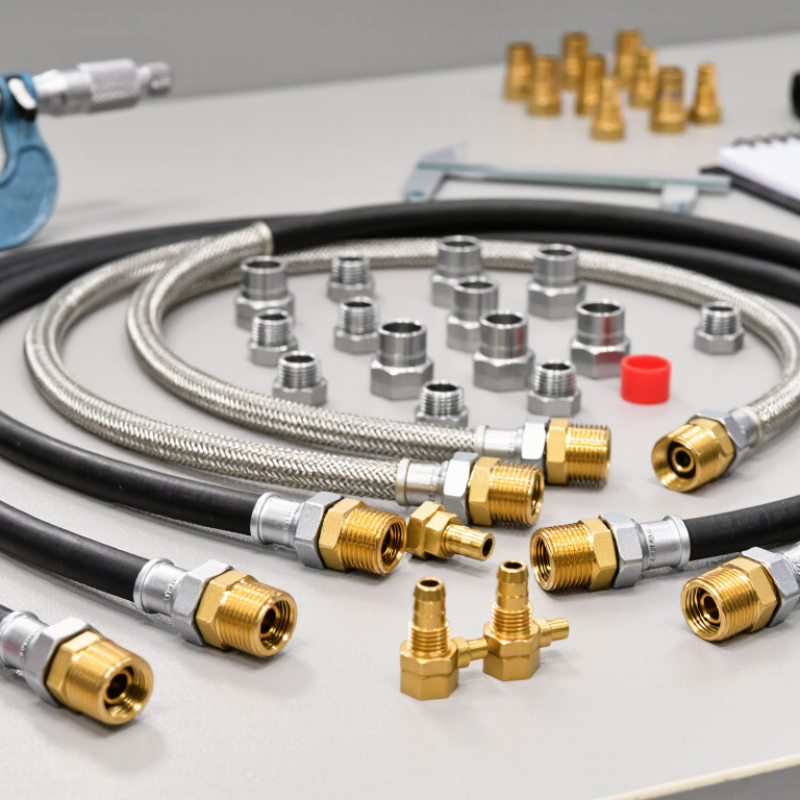
Hydraulic test point hoses connect pressure gauges or diagnostic instruments to compact test ports. They allow technicians to check pressure without dismantling a circuit. A practical assembly usually includes a test hose, couplings, protective caps, and a compatible measuring device.
ISO 15171-2 provides dimensional and performance requirements for hydraulic test couplings. Suppliers should also state working pressure, burst pressure, temperature range, hose length, and fluid compatibility.
Fortune Business Insights valued the global hydraulic equipment market at about USD 49 billion in 2023. This growth increases demand for reliable diagnostic accessories, including test point hoses.
These hoses support commissioning, preventive maintenance, and fault finding on presses, injection machines, agricultural equipment, and mobile hydraulics. A technician may connect a hose near a pump outlet, observe pressure changes, and compare readings with the machine’s service data.
Small details matter. Poor sealing can create misleading readings or fluid leakage.
Suppliers with traceable testing, clear technical drawings, and documented material data deserve closer evaluation. In practice, many failures begin with an incorrect thread or pressure rating.
I still consider field verification essential, because published specifications cannot reveal every installation mistake.
When evaluating hydraulic test point hose suppliers, start with technical fit, not price. A reliable supplier should provide pressure ratings, burst limits, temperature ranges, and fluid compatibility data. Ask whether each hose matches your test point fittings and required bend radius. Small mismatches can cause leakage, restricted flow, or difficult gauge installation.
Practical experience matters here. Request sample assemblies before placing a large order. Inspect the crimp area, protective caps, thread accuracy, and hose flexibility by hand. A capable supplier should explain its pressure-testing method and provide batch traceability. Certificates should identify production dates, test values, and inspection standards. Clear answers matter. Vague documents do not.
Check consistency across repeated orders. Can the supplier maintain dimensions, cleanliness, and delivery times during urgent maintenance work? Ask about replacement availability and technical support after installation. Some suppliers promise fast delivery, but their stock information may be outdated. That deserves careful verification. A short trial order can reveal packaging problems, labeling errors, or unexpected fitting tolerances. I would also record field feedback, even when the first installation seems successful. A hose that performs well today may still show poor abrasion resistance after months near vibrating equipment. Credibility grows through evidence, not polished claims.
This illustrative procurement framework assigns a 100-point evaluation weight to the factors most relevant to hydraulic test point hose sourcing. Product safety and pressure performance receive the highest emphasis, followed by connection compatibility, traceability, delivery reliability, and total cost. Actual weightings should be adjusted to match system pressure, fluid type, applicable standards, and operating conditions.
Hydraulic test point hose suppliers serve a small but critical role in fluid power systems. Their hoses connect pressure gauges, diagnostic equipment, and test points during maintenance. Leading suppliers stand out through dependable construction, accurate specifications, and practical field support.
Experienced suppliers offer hoses with reinforced inner tubes, protective outer covers, and fittings suited to demanding hydraulic environments. They usually provide several pressure ratings, temperature ranges, and length options. Clear technical drawings reduce connection errors during installation. Some suppliers also support custom assemblies for restricted spaces or unusual port configurations. That flexibility matters when standard dimensions do not fit.
Quality control should include pressure testing, leak inspection, fitting verification, and material traceability. A reliable supplier can explain test methods instead of offering vague assurances. Packaging also deserves attention. Caps, labels, and bending protection can prevent damage before the hose reaches the workshop. Strong technical teams help users choose suitable fittings and avoid excessive bending near connections.
No supplier is perfect. Some catalogs lack useful application details. Others respond slowly when a replacement is urgently needed. I would examine sample assemblies, inspection records, delivery performance, and after-sales communication before making a decision. A low price may look attractive, but premature leakage can create more downtime and labor costs. Suppliers with honest limitations often prove more trustworthy than those promising everything.
Selecting top hydraulic test point hose suppliers requires more than comparing catalog prices. Product quality starts with controlled dimensions, abrasion resistance, and documented pressure ratings. ISO 15171-2 provides requirements for hydraulic diagnostic test point couplings, so suppliers should show compliance evidence, not vague “industrial grade” claims. Grand View Research’s 2024 hydraulic hose analysis forecasts a 4.8% market CAGR through 2030, reflecting growing demand for dependable fluid-control components.
Compatibility is often the hidden cost. Check thread standards, sealing materials, working temperature, fluid type, and bend radius before ordering. A hose that fits the port may still fail with phosphate-ester fluids or repeated vibration.
Suppliers offering clear dimensional drawings and sample verification deserve stronger consideration. I have seen purchasing teams overlook connection geometry. That mistake is expensive.
Pricing should include fittings, minimum order quantities, testing, freight, and replacement downtime. MarketsandMarkets’ 2024 hydraulic equipment report identifies maintenance efficiency as a major purchasing driver, supporting lifecycle-cost comparisons rather than unit-price decisions.
Support quality matters during installation. Look for traceable batch records, pressure-test certificates, response times, and practical technical guidance. A low quotation can be misleading.
My own comparison would still need field data, because published specifications rarely capture contamination, operator handling, or harsh-site conditions.
Selecting the right hydraulic test point hose supplier requires more than comparing prices. Start with application data: working pressure, temperature range, fluid type, hose length, bend radius, and connection size. A dependable supplier should help verify these details before quoting. Guesswork can create expensive failures.
Look for documented pressure testing, material traceability, and consistent cleanliness controls. Ask whether each assembly receives a leak test and whether inspection records accompany the shipment. Experienced suppliers can explain impulse ratings, fitting compatibility, and protective sleeve options in practical terms. Request samples or technical drawings when dimensions are critical. Small errors matter.
Delivery reliability also deserves attention. Confirm production lead times, packaging methods, replacement support, and technical response times. A supplier with clear quality procedures is easier to audit and easier to trust. However, certificates alone do not prove good service. Check references, inspect sample assemblies, and compare actual communication during the inquiry. Keep records. One detail is easy to miss: the hose may meet its pressure rating but still fail because of excessive bending near the fitting. Ask the supplier to review installation conditions, not only product specifications. Perfect selection is difficult, and even experienced teams sometimes overlook field movement or temperature changes. That is why a practical supplier should welcome questions and revise recommendations when the evidence changes.
They connect pressure gauges, diagnostic tools, and hydraulic test points. They support maintenance checks. Small parts matter.
Look for a reinforced inner tube and a protective outer cover. Suitable fittings should match the hydraulic environment. Abrasion resistance also matters near machinery.
Compare pressure ratings, temperature ranges, lengths, thread standards, and sealing materials. Check the fluid type and required bend radius. A fitting may look correct but still fail.
Request dimensional drawings and verify port geometry. Check thread details, sealing surfaces, and connection angles. A sample assembly can expose problems early.
Useful records include pressure tests, leak inspections, fitting verification, and material traceability. Ask how each test is performed. Vague claims are not enough.
Protective caps can keep dirt away from open connections. Labels help workers identify sizes and pressure ratings. Bending protection reduces damage during transport.
Include fittings, testing, minimum order quantities, freight, and replacement labor. A cheap hose may create leaks and downtime. Unit price is incomplete.
Helpful teams explain fitting choices, installation limits, and bending near connections. They should provide batch records and practical response times. Support can still be slower than promised.
Review sample assemblies, inspection records, delivery performance, and technical communication. Field conditions may differ from catalog descriptions. I would not trust specifications alone.
Hydraulic Test Point Hose assemblies are compact, flexible components used to connect diagnostic equipment to hydraulic systems, allowing technicians to measure pressure, monitor performance, identify faults, and support preventive maintenance. They are commonly applied in mobile machinery, industrial equipment, manufacturing systems, and other fluid-power applications. A reliable hose should provide secure connections, accurate performance, resistance to pressure and temperature, and sufficient flexibility for use in confined spaces.
When evaluating suppliers, buyers should consider product quality, material durability, pressure ratings, connection compatibility, size options, customization, pricing, delivery reliability, and technical support. Comparing suppliers also involves reviewing testing procedures, quality-control practices, documentation, warranty terms, and after-sales service rather than focusing only on the lowest cost. The right Hydraulic Test Point Hose supplier should understand the intended system, recommend suitable specifications, maintain consistent product availability, and provide clear guidance for installation and maintenance. A careful selection process can improve measurement accuracy, reduce downtime, increase operator safety, and deliver better long-term value.

TM Hydraulic