 TM Hydraulic
Top Pressure Test Coupling Manufacturers for Global Buyers?
Pressure Test Coupling selection is a small purchasing decision with serious consequences. A leaking seal, mismatched thread, or poorly documented pressure rating can interrupt a test and compromise its results. For global buyers, the challenge is not simply finding a supplier. It is verifying whether a coupling’s materials, connection type, working pressure, and traceability suit the actual test setup.
The wider industrial market gives this demand useful context, though it does not measure couplings alone. Grand View Research estimated the global industrial valves market at USD 79.4 billion in 2023 and projected continued growth through 2030. That broader market includes equipment used across process industries, where dependable pressure control and testing matter. Technical references also help buyers ask precise questions: ISO 19879 sets test methods for metallic tube connections, while applicable system requirements depend on the equipment and application. Details matter.
This guide compares manufacturers through practical criteria: published pressure ratings, material options, connection compatibility, quality documentation, and access to technical support. A buyer reviewing a coupling should check the markings against the datasheet, then confirm fit with the hose or test port—not rely on appearance alone. Small parts. High consequences. Yet even a neat comparison table has limits: product ranges change, and published specifications may not answer every application question. Use the shortlist as a starting point, then verify critical requirements directly with each manufacturer.
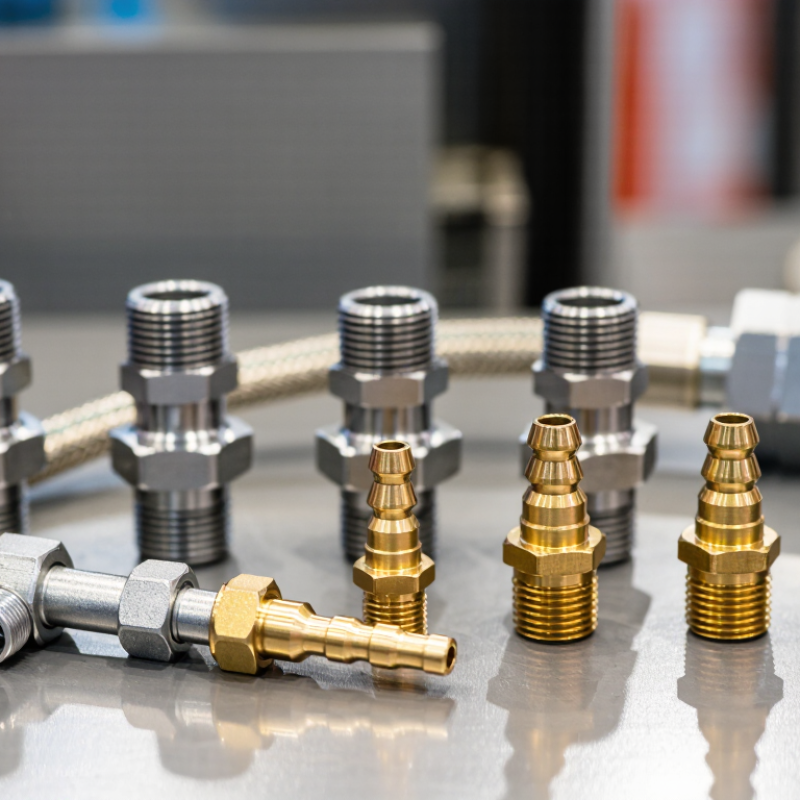
Pressure Test Couplings: Types, Functions, and Common Applications
Top Pressure Test Coupling Manufacturers for Global Buyers?
Pressure test couplings provide access to hydraulic lines for checking system pressure. Common designs include threaded test points, push-to-connect couplings, and quick-connect versions. Each suits different hose layouts and service routines. A threaded point can stay installed on a manifold, while a quick-connect fitting allows a gauge to be attached with little delay. Small parts, but a poor match can cause leaks or unreliable readings.
Technicians use these couplings on pumps, cylinders, mobile equipment, and lubrication circuits. They can help identify pressure drops, compare readings across a circuit, or confirm operating conditions during maintenance. Choose a coupling by working pressure, connection size, fluid compatibility, and the gauge or test hose it must accept. Check the equipment documentation; fitting appearance alone is not enough. Some details are easy to overlook.
Tips: Clean the connection before attaching a test hose, and use a pressure-rated gauge. Isolate and depressurize the circuit before removing a coupling. Never force a mismatched connector. A reading is only useful when the connection is secure and the test method suits the system.
Pressure Test Couplings: Types, Functions, and Common Applications
| Coupling Type | Typical Connection | Primary Function | Common Applications | Key Selection Considerations |
|---|---|---|---|---|
| Self-Sealing Test Point | Threaded installation in a hydraulic circuit; connects to a compatible test probe. | Provides a measurement access point while a built-in valve helps limit fluid loss when the probe is disconnected. | Hydraulic power units, mobile equipment, machine tools, and industrial hydraulic systems. | Check thread form, working-pressure rating, fluid compatibility, temperature range, and probe compatibility. |
| High-Pressure Test Coupling | Pressure-rated test point and matching probe or hose assembly. | Enables pressure measurement at designated points in higher-pressure hydraulic circuits. | Construction machinery, presses, injection-molding equipment, and other high-pressure hydraulic systems. | Verify the rating of every connected component, including the test point, probe, hose, and gauge. The lowest-rated component limits the assembly. |
| Quick-Connect Test Coupling | Push-to-connect or other quick connection, depending on the coupling design. | Allows instruments or test hoses to be connected and removed efficiently at compatible test ports. | Routine troubleshooting, commissioning, and maintenance where measurement points are accessed regularly. | Confirm that the connection profile is compatible; quick-connect designs are not necessarily interchangeable across systems. |
| Test Hose Coupling Assembly | End fittings attached to a flexible pressure-rated test hose. | Connects a test point to a pressure gauge, transducer, or diagnostic instrument, allowing safer positioning of the instrument. | Hydraulic pressure checks in confined spaces or locations where the measurement instrument cannot be mounted directly. | Check hose pressure rating, length, bend limits, end-fitting compatibility, and the instrument’s measurement range. |
| Threaded Test Adapter | Threaded adapter connecting a test port to a compatible instrument or hose. | Adapts between specified port or fitting connections for pressure testing. | Service work, retrofit installations, and systems with different specified port and instrument connections. | Identify thread standard, size, sealing method, and pressure rating. Similar-looking threads may not seal or fit correctly. |
| Multi-Point Test Manifold | Several test ports arranged on a common manifold, with defined circuit connections. | Provides convenient access to multiple pressure measurement locations from one assembly. | Hydraulic test benches, centralized power packs, and equipment requiring repeated measurements at several circuit locations. | Confirm port labeling, circuit layout, mounting requirements, and the pressure rating for the complete manifold assembly. |
Selection and safety note: Pressure ratings, connection profiles, materials, and temperature limits vary by design. Select components against the equipment manufacturer’s requirements, use compatible test instruments, and depressurize the circuit before installation or removal unless the procedure specifically permits live testing.
FAQS
Match the coupling to working pressure, fluid, temperature, connection type, and expected test cycles. A small hydraulic rig may need different specifications from a high-pressure water test. Details matter.
Ask for material specifications, dimensional drawings, inspection records, and pressure-test reports. Check that pressure ratings state the conditions they apply to. Ask for evidence.
Ask whether test equipment is calibrated and how production batches are identified. Request a sample report and confirm which documents accompany each order. Records can reveal gaps.
No. The rating alone says little about suitability. Confirm that the materials and seals fit your test fluid, temperature, and connection.
Send each supplier the same written specification, quantity, delivery terms, and packaging requirements. Compare production lead times, dispatch points, shipping methods, and tracking options. Small details matter.
A sample or small batch can help check fit, sealing, markings, and documents. Compare each item with your acceptance criteria. I might still overlook a mismatch.
Share drawings or clear measurements for the installed thread and hose assembly. Ask the supplier to confirm compatibility in writing. A pressure check cannot confirm every fit detail.
The article cites an average of 44 days for shipments between export and destination ports, based on a 2023 logistics index. Treat this as context, not a promise. Confirm the actual schedule directly.
Conclusion
This guide explains how a Pressure Test Coupling works, the main types available, and where these components are commonly used in hydraulic and fluid testing systems. It outlines practical criteria for evaluating manufacturers, including product range, material selection, engineering support, production consistency, and the ability to meet different application requirements. Readers will also find guidance on comparing manufacturers’ product specialties and assessing whether their offerings are suitable for specific operating conditions.
The article also reviews the role of quality standards, certifications, and documented testing practices in supplier evaluation. For global buyers, it provides a straightforward approach to comparing quotations, checking specifications, confirming lead times, and clarifying packaging and order requirements. By considering performance, quality evidence, communication, and overall purchasing needs together, buyers can make a more informed supplier choice and place orders with greater confidence.
