
7 Tips for Buying a Hydraulic Hose Pressure Tester

Time:2026-11-15 Author:Mason
0%

Choosing a Hydraulic Hose Pressure Tester is not just a matter of finding the largest number on a dial. The right unit should match the hose assemblies and pressure range you need to verify. It should also suit your fittings, workspace, and record-keeping needs. Small details matter. A gauge that is hard to read under shop lighting can slow an inspection. An incompatible connection can make a promising tester unusable.

This guide introduces seven practical buying considerations, from pressure capacity and gauge accuracy to adapters, protective features, and calibration documentation. Hydraulic testing specialist Alex Rowan is an illustrative editorial persona for this introduction; the quotation below is an original buying principle, not a verified statement from a real, named expert: “Choose the tester for the pressure range you actually need to verify, not the biggest number on the dial.” That distinction is easy to overlook.

Look closely at the whole setup. Check whether the tester accommodates your hose ends, whether its controls are clear, and whether the supplier explains maintenance and calibration support. Ask how the equipment is intended to be used, and follow its manual and applicable workplace procedures. A polished product photo tells you little about service access or replacement parts. One point deserves a second look: a lower purchase price may not reflect the cost of adapters, upkeep, or downtime. These tips can help you compare options with better questions, not guesswork.
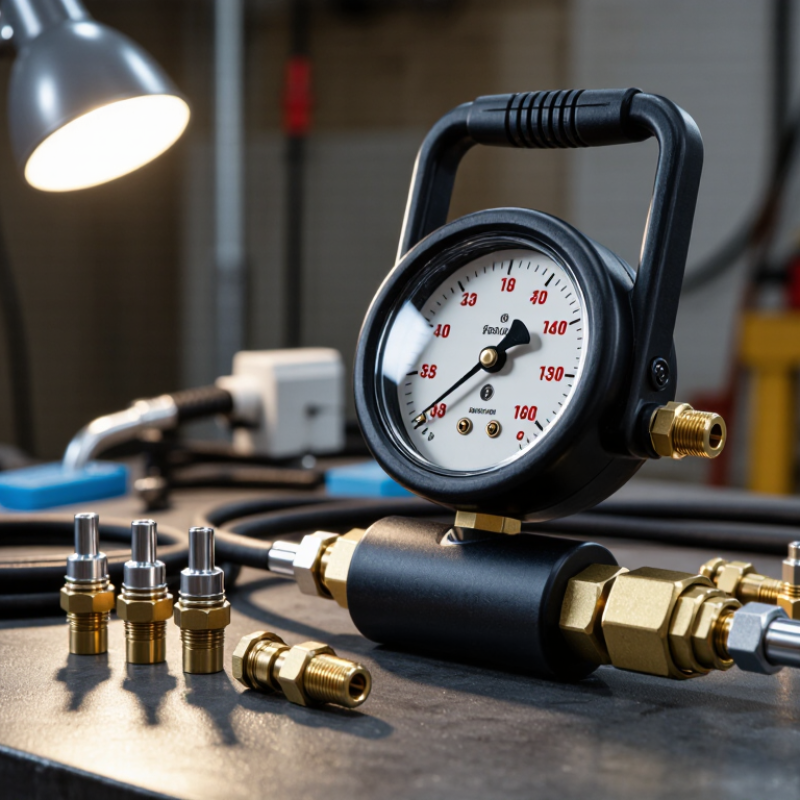
7 Tips for Buying a Hydraulic Hose Pressure Tester

Understand What a Hydraulic Hose Pressure Tester Measures

A hydraulic hose pressure tester measures the pressure applied to an assembly, usually in bar, MPa, or psi. It may also record how long pressure is held and whether it drops during the test. A steady reading matters. A falling reading can point to leakage, a loose fitting, or a test setup issue, but the tester alone may not identify the cause. It does not measure flow rate or prove a hose’s full service life.

Check the instrument’s pressure range, accuracy, and ability to capture peak readings before buying. ISO 6605:2017 outlines test methods for hydraulic hose assemblies, while ISO 6803:2017 covers hydraulic-pressure impulse testing. These standards distinguish test conditions, so a single pressure reading should not be treated as a universal pass mark. Match the tester and procedure to the hose maker’s specified test pressure. For example, a range that is far above the target can make small changes hard to see. Easy to miss. A readable display and a calibration record help, too. I would also check whether the system logs pressure over time; manual notes can be messy, and I have seen that detail overlooked.

Choose a Tester with the Right Pressure Range and Accuracy

A hydraulic hose pressure tester should cover the highest pressure required by your test procedure, while leaving a sensible operating margin. Check the hose and connected equipment ratings before choosing a range; the tester must not become the limiting component. A gauge that reads near its maximum during routine checks can be difficult to interpret and may be more vulnerable to overload. On the other hand, an unnecessarily broad range can make small pressure changes hard to see. That trade-off is easy to miss.

Accuracy matters as much as range. Compare the stated accuracy, often given as a percentage of full scale, and consider how that affects readings at your usual test pressure. For example, a small error on a high-range gauge may be significant when checking a lower-pressure hose. Look for clear graduations and enough resolution to spot meaningful changes, not just an impressive specification. Small details matter. Confirm that calibration records are available and set a recheck interval based on use, storage, and handling. In practice, the “best” accuracy is not always the tightest one; a readable, properly ranged instrument is more useful than a precise gauge that is difficult to interpret.

Choosing a Hydraulic Hose Pressure Tester

Compare example pressure ranges and accuracy targets when selecting a tester. These are illustrative selection scenarios, not universal equipment specifications.

Choose a pressure range that covers the highest pressure you expect to measure, following the tester and system manufacturers’ limits. Check whether accuracy is specified as a percentage of full scale, and confirm calibration requirements before use.

Check Hose, Fitting, and System Compatibility

A tester is only suitable when its hose, fittings, and gauge match the assembly under test. Check the hose marking for nominal size, working-pressure rating, fluid type, and temperature range. ISO 18752:2017 covers hydraulic hose pressure ratings from 3.5 to 42 MPa, illustrating how widely hose specifications can vary. Do not assume two hoses with the same outside diameter share a pressure rating. Not just pressure.

Inspect the fitting thread and sealing face before connecting the tester. A JIC flare, O-ring face seal, and tapered pipe thread are not interchangeable; forcing an adapter can damage the seal or create a leak. SAE J517 provides hose specifications, but the exact hose type and size still matter. Match the tester and every adapter to the assembly’s prescribed test pressure, not merely its normal operating pressure. Use the test procedure specified for that assembly. A higher reading is not automatically a better test.

Also verify fluid compatibility and temperature limits across the entire setup, including seals and couplings. Trapped air, a mismatched fitting, or a gauge with an unsuitable range can distort results. Small details matter. Compatibility checks can feel tedious, and it is easy to overlook an adapter tucked in a kit; record the hose marking and connection type before pressurizing.

7 Tips for Buying a Hydraulic Hose Pressure Tester - Check Hose, Fitting, and System Compatibility
Tip What to Check Buying Guidance Compatibility Verification
1. Match the pressure range Identify the system’s normal operating pressure and the pressure required for the intended test. Choose a tester with a suitable measurement range and a maximum working pressure at least as high as the planned test pressure. Do not exceed the rating of any connected component. Check the pressure ratings of the tester, gauge, hose, fittings, adapters, and the component being tested. The lowest-rated component limits the assembly.
2. Confirm hose pressure and temperature ratings Review the hose’s working-pressure rating, temperature range, size, and condition. Select a pressure-rated test hose suited to the expected pressure, fluid, and temperature. Avoid damaged, kinked, abraded, or unidentified hoses. Compare the hose markings or manufacturer documentation with the test conditions; never use burst pressure as the allowable working pressure.
3. Match fitting type and sealing method Identify connection standards, thread size, gender, and seal type at every connection point. Choose a tester or pressure-rated adapter set that matches the system connections. Similar-looking threads may use different sealing methods. Verify the fitting specification and sealing surface, such as an O-ring face seal, tapered thread, or flare. Do not force mismatched connections.
4. Check fluid and seal compatibility Determine the hydraulic fluid used in the system and the materials in the tester’s seals and wetted parts. Confirm compatibility with the specific fluid, including any water-glycol or other specialized fluid. Do not assume a tester is compatible with every hydraulic medium. Check the equipment documentation for approved fluids and temperature limits. Flush or clean the tester as appropriate when changing fluid types.
5. Select suitable gauge accuracy and readability Consider the pressure range, required measurement tolerance, dial or display readability, and units needed. Specify the required accuracy and a scale that makes the expected test pressure easy to read. A digital display is useful where resolution or data recording is required. Check the stated accuracy, calibration status, measurement units, and whether the gauge is intended for the pressure range and test procedure.
6. Review system connection and isolation needs Identify the test port location, available access, pressure source, and how the test section will be isolated. Choose a tester with suitable hose length, connection layout, and any required shutoff or bleed features. Confirm these features are rated for the intended pressure. Check the equipment diagram and test procedure for safe isolation and pressure release. Depressurize the system before connecting or removing the tester.
7. Check calibration, documentation, and safety features Review calibration requirements, operating instructions, inspection intervals, and protection from pressure spikes. Ask for the specified calibration information and clear operating limits. Consider a protective case or pressure-pulsation protection where the application requires it. Confirm the tester can be inspected and maintained under your site procedures. Follow the system and tester instructions, and keep personnel clear of pressurized connections.

Compare Safety Features, Durability, and Ease of Use

When comparing hydraulic hose pressure testers, treat safety features as more than a checklist. A clear pressure gauge, secure couplings, and a protective barrier can reduce exposure if a connection fails. Look for a controlled pressure-release valve and fittings rated for the intended test range. Never rely on the tester’s maximum reading alone; the hose and every adapter must also be suitable. Small detail. A readable dial matters when the unit sits on a bench under bright workshop lights.

Durability shows up in ordinary use: a reinforced case, corrosion-resistant fittings, and a hose that resists abrasion around metal edges. Check whether seals and adapters can be replaced, since a worn seal may cause leaks or unreliable readings. Heavy construction is useful, but extra weight can make setup awkward. That trade-off is easy to miss.

For ease of use, compare gauge spacing, control layout, connection steps, and instructions for safe depressurization. A simple setup can prevent avoidable mistakes, especially when technicians wear gloves. Try reading the scale from your usual working position, not just at the counter. I would still pause over vague instructions; a polished case cannot make an unclear procedure dependable. Choose a tester suited to the job, and verify calibration and inspect connections before testing.

Evaluate Calibration, Support, and Total Cost of Ownership

7 Tips for Buying a Hydraulic Hose Pressure Tester

Evaluate calibration before comparing prices. Ask for a certificate showing the test range, results, uncertainty, and traceability. A certificate that only says “passed” offers little help when a reading sits near a hose’s acceptance limit. NIST Technical Note 1297 explains that a coverage factor of 2 corresponds to approximately 95% coverage under stated assumptions. That context makes uncertainty easier to judge, though it does not guarantee a tester suits every job.

Check how calibration support works in practice. Confirm the recommended interval, service turnaround, shipping requirements, and whether recalibration covers the pressures you actually use. ISO/IEC 17025 sets competence requirements for testing and calibration laboratories; ask whether the provider’s relevant calibration work falls within its accredited scope. A practical check: can support staff explain what happens after an out-of-tolerance result? Test that before purchase. Downtime can matter more than a small price difference.

Compare total ownership costs over several years, not just the purchase quote. Include calibration, repairs, fittings, training, freight, and time lost while the tester is away. A spreadsheet helps, but estimates are imperfect. Record likely usage and local service costs, then revisit them after the first year. A cheaper unit may be sensible for occasional checks; frequent shop-floor use may justify faster service and easier maintenance. Keep that trade-off visible.

FAQS

How should I choose a tester’s pressure range?

Choose a range above the procedure’s highest required pressure, with a sensible operating margin. Avoid routine readings near the gauge’s maximum. An overly broad range can hide small changes.

Why does gauge accuracy matter at lower test pressures?

Accuracy stated as a percentage of full scale can mean larger errors at lower readings. Check resolution and clear graduations. Small details matter.

Should I choose the most precise gauge available?

Not always. A properly ranged, readable gauge may be more useful than a precise but difficult-to-read one. I still find that trade-off easy to miss.

What should I check on the hose before connecting a tester?

Read its markings for nominal size, working-pressure rating, fluid type, and temperature range. Similar-looking hoses may have different pressure ratings.

Can I use any adapter that fits the connection?

No. Match the thread and sealing face, such as a flare or O-ring face seal. Forcing a mismatched adapter can damage a seal or cause a leak.

Which pressure should guide the test setup?

Follow the assembly’s specified test procedure and pressure. Match the tester, hose, and every adapter to that pressure. A higher reading is not automatically better.

What else can affect a pressure reading?

Trapped air, incompatible fluid, temperature limits, or mismatched fittings can distort results. Check seals and couplings too.

How can I maintain confidence in gauge readings?

Keep calibration records and set recheck intervals based on use, storage, and handling. Record hose markings and connection types before pressurizing. It is easy to miss one adapter.

Conclusion

Choosing the right Hydraulic Hose Pressure Tester starts with understanding what it measures, such as pressure levels and possible changes that may indicate a problem. Match the tester’s pressure range and accuracy to the systems you need to check, allowing for both normal operating conditions and expected testing requirements. Confirm that its connections and measurement method are compatible with the hoses, fittings, and equipment in your setup.

Before buying, compare practical safety features, construction quality, and ease of operation. Clear readings and straightforward controls can make routine checks more efficient, while durable materials may help the tester withstand regular use. Also consider how calibration is handled, whether technical support is available, and what maintenance or replacement costs may arise over time. Looking at the total cost of ownership—not just the purchase price—can help you select a reliable tester that suits your application and remains useful in the long term.

Mason

Mason

Mason is a seasoned marketing professional with a deep expertise in the company's offerings and a passion for driving brand awareness. With a strong background in digital marketing strategies, he has an innate ability to connect with diverse audiences and effectively communicate product benefits.......