 TM Hydraulic
How to Choose the Right Pressure Gauge Test Hose for Your Needs?
Selecting the right Pressure Gauge Test Hose is crucial for accurate measurements. A quality test hose ensures reliable performance and precise results. Many factors influence your choice, such as pressure rating, material, and length.
When assessing different hoses, consider the environment they'll be used in. Some hoses are more suitable for high temperatures or corrosive conditions. Choosing a hose that's too long may reduce accuracy. Keep in mind the connectors as well. Compatibility with your pressure gauge is essential.
Mistakes can happen when selecting a hose. Using the wrong material can lead to leaks or damage. It's important to research and evaluate options thoroughly. A proactive approach in choosing your Pressure Gauge Test Hose can prevent future problems. Remember, the right choice contributes to overall measurement efficiency and safety.
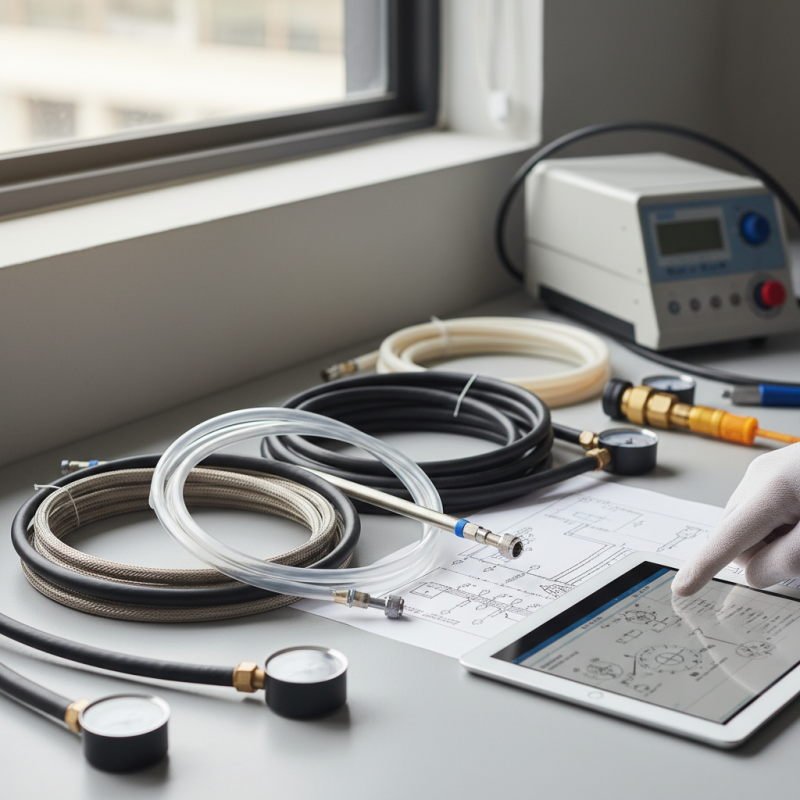
Understanding the Basics of Pressure Gauge Test Hoses
When selecting a pressure gauge test hose, understanding the fundamentals is crucial. Pressure gauge test hoses connect gauges to the monitored system. They need to withstand the pressure and temperature of the application. A standard pressure gauge operates typically up to 6,000 psi. It’s important to choose hoses rated above this to ensure safety and accuracy.
Material also plays a vital role. Common options include rubber, PVC, or braided stainless steel. Each material has its advantages. A study revealed that stainless steel hoses last longer under high pressure compared to rubber. However, rubber hoses are often more flexible, making them easier to maneuver. Consider the environment where the hose will be used. Extreme temperatures or chemicals can degrade some materials faster than others.
Another aspect to weigh is the length and diameter of the hose. Longer hoses can lead to pressure drops. An inappropriate diameter can restrict flow or lead to leaks. Industry data suggest that a pressure loss of 1 psi per 100 feet can significantly affect readings. It's vital to balance flexibility and performance. Reflect on your specific needs before making a choice; an ill-suited hose can compromise safety and measurement accuracy.
How to Choose the Right Pressure Gauge Test Hose for Your Needs?
| Dimension | Description | Material | Pressure Rating (psi) | Temperature Range (°F) | Common Applications |
|---|---|---|---|---|---|
| 1/4 inch | Standard test hose for low pressure applications | Rubber | 0-3000 | -40 to 185 | Hydraulic systems, general pressure testing |
| 3/8 inch | Larger diameter for higher flow rates | PVC | 0-5000 | -20 to 150 | Automation, process control |
| 1/2 inch | Heavy-duty hose for industrial applications | Stainless Steel | 0-10000 | -40 to 250 | Oil and gas, high-pressure testing |
| 5/8 inch | Specialized for very high flow applications | Composite | 0-15000 | -40 to 300 | Power generation, chemical processing |
FAQS
: It connects gauges to the system being monitored, ensuring accurate readings.
A standard gauge usually operates up to 6,000 psi.
Common materials include rubber, PVC, and braided stainless steel, each with unique benefits.
Different materials endure various pressures and environments, affecting durability and flexibility.
Longer hoses may lead to pressure drops, impacting measurement accuracy significantly.
An inappropriate diameter can restrict flow or cause leaks, leading to inaccurate readings.
Different applications demand varied specifications; selecting the wrong hose can cause failures.
Up to 40% of failures occur due to material incompatibility with harsh chemicals, leading to malfunctions.
Assess your unique needs and conditions thoroughly before making a choice to improve accuracy.
Consider pressure ratings, material durability, length, and diameter to avoid compromising safety.
Conclusion
When selecting the appropriate Pressure Gauge Test Hose for your needs, it is essential to start with a thorough understanding of its basic functionality. These hoses are designed to connect pressure gauges to systems, allowing for accurate readings. Consider your specific testing requirements, such as the type of fluids being measured and the environment in which the hose will be used.
Next, evaluate the material and construction quality of the Pressure Gauge Test Hose to ensure durability and resistance to potential damage. Additionally, compatibility with fittings and connectors is crucial to maintain a secure connection. Finally, assessing the length and pressure rating of the hose will help optimize performance for your particular application, ensuring reliable and accurate pressure measurements. By following these guidelines, you can choose the right Pressure Gauge Test Hose tailored to your specific requirements.
