 TM Hydraulic
China Best Pressure Gauge Test Hose Manufacturers and Suppliers
Choosing a Pressure Gauge Test Hose supplier in China involves more than comparing prices or browsing polished catalogs. The hose must suit the gauge, test medium, operating pressure, and working environment. A mismatch in thread type or pressure rating can cause delays and unreliable readings. Small details matter. Buyers should check the hose’s materials, temperature range, bend radius, end connections, and stated working pressure before requesting a quotation.
This guide introduces manufacturers and suppliers serving different testing needs, from routine equipment checks to demanding industrial applications. It also explains what to ask about sample availability, production quality checks, product markings, and inspection records. Ask whether pressure ratings refer to working pressure or burst pressure; those figures are not interchangeable. Confirm connection dimensions with drawings or samples, rather than relying on a product photo. That takes care. A catalog can appear complete and still leave essential details unclear. I have to admit, supplier descriptions do not always make comparison easy. Requesting written specifications and confirming them against your application can reduce avoidable misunderstandings. The right choice depends on documented capability, consistent communication, and a hose configuration that fits the test setup—not on a “best” label alone.
Pressure Gauge Test Hoses: Construction, Materials, and Core Functions
China Best Pressure Gauge Test Hose Manufacturers and Suppliers
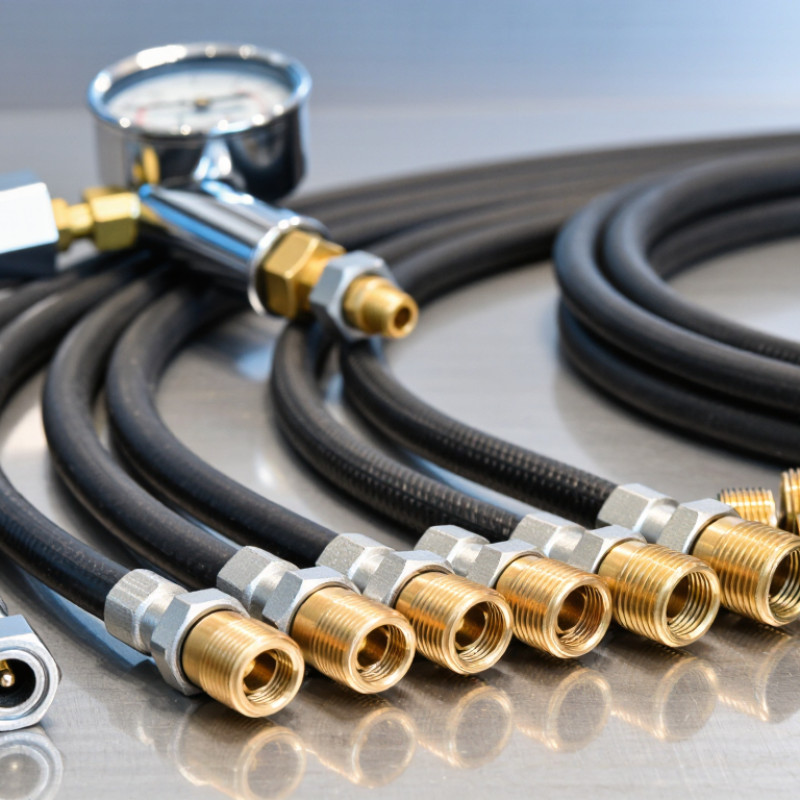
Pressure gauge test hoses connect calibration equipment to hydraulic or pneumatic measuring points. Their construction must handle pressure, movement, and repeated installation. A typical hose contains an inner tube, reinforcement layers, and an outer protective cover. Crimped fittings secure the ends. Thread accuracy matters because a small mismatch can cause leakage or damage.
The inner tube often uses synthetic rubber, thermoplastic material, or stainless steel tubing. Material choice depends on pressure, temperature, fluid compatibility, and bending frequency. Reinforcement may include braided steel wire or textile layers. Steel improves pressure resistance, while textile reinforcement can reduce weight. The outer cover protects against abrasion, oil, moisture, and workshop contact. It still needs inspection.
In field testing, technicians check the hose surface, fittings, and sealing elements before connection. They also confirm the rated pressure exceeds the working pressure. A test hose transfers pressure steadily and helps isolate a gauge from the main system. This supports calibration, troubleshooting, and leak detection. Short hoses reduce movement, but excessive bending can weaken fittings. In practice, no hose is perfect. I have seen reliable assemblies fail after poor routing and over-tightening. Suppliers should provide pressure ratings, material details, dimensional records, and traceability documents. A careful manufacturer also explains storage limits and replacement intervals, not only selling length and thread options.
| Hose Assembly Element | Common Construction or Material | Core Function | Key Selection Considerations |
|---|---|---|---|
| Inner tube | May be made from synthetic rubber, polyamide (nylon), or PTFE, depending on the hose design. | Contains the test medium and provides the fluid-contact surface. | Check compatibility with the fluid, operating temperature, cleanliness requirements, and the manufacturer’s stated pressure limits. |
| Reinforcement layer | Common designs use textile reinforcement, steel wire braid, or other specified reinforcing layers. | Helps the hose withstand internal pressure and resist expansion during testing. | Use the pressure rating for the complete hose assembly. Reinforcement type alone does not establish a safe working pressure. |
| Outer cover | Often synthetic rubber or a polymer cover selected for the intended environment. | Protects the reinforcement from abrasion, handling damage, and environmental exposure. | Consider abrasion, oil or chemical exposure, ultraviolet light, and the temperature range stated for the product. |
| End fittings and adapters | May use steel or stainless-steel components, with connection forms such as threaded, cone, or quick-connect fittings. | Connects the hose to a pressure source, test point, gauge, or calibration equipment. | Match thread type, size, sealing method, pressure rating, and material compatibility. Do not rely on visual similarity alone. |
| Seals | Elastomeric seals are selected according to the connection design and service medium. | Help prevent leakage at detachable connections. | Confirm the seal material is compatible with the fluid and temperature, and inspect seals for wear or damage before use. |
| Pressure transmission | A correctly assembled, fluid-filled hose connects the test point to the measuring instrument. | Transmits system pressure to a pressure gauge or calibration device. | Remove trapped air where required by the test procedure, and keep the hose free from kinks or restrictions that may affect the measurement. |
| Isolation and remote reading | Flexible hose assemblies are available in different lengths and fitting configurations. | Can position a gauge away from a test point and support access to difficult-to-reach connections. | Choose a suitable length and routing; secure the assembly and keep personnel clear of potential leak or failure paths during pressurization. |
| Pressure rating and safety | Ratings are specific to the hose assembly, fittings, temperature, and service conditions. | Defines the documented operating limits for the assembled test connection. | Follow the manufacturer’s working-pressure and temperature specifications, applicable test procedures, and inspection or replacement guidance. Never exceed the lowest-rated component. |
FAQS
It connects calibration equipment with hydraulic or pneumatic measuring points. The hose transfers pressure steadily. It also helps isolate a gauge during testing.
Most assemblies contain an inner tube, reinforcement layers, and an outer cover. Crimped fittings secure both ends. Thread accuracy is critical. Small mismatches may cause leaks or damage.
Inner tubes may use synthetic rubber, thermoplastic material, or stainless steel. Braided steel wire improves pressure resistance. Textile layers reduce weight, but may offer different protection.
Check working pressure, temperature, fluid compatibility, length, and bending frequency. The rated pressure must exceed the actual working pressure. A short hose usually moves less during testing.
Examine the cover, fittings, seals, and threads. Look for cuts, corrosion, distortion, or loose parts. Do not ignore small defects. They can grow.
Fill the hose slowly with clean water. Remove trapped air from the highest point. Raise pressure gradually and use suitable barriers. Keep clear.
Record gauge identification, test pressure, holding time, water temperature, and visible conditions. Note leakage, bulging, sweating, or fitting movement. Incomplete records create avoidable uncertainty.
Request material certificates, batch numbers, pressure-test results, drawings, and dimensional records. Calibration records should identify the actual equipment and test conditions. A certificate is not magic. Traceability matters more than appearance.
Ask for recent delivery data, average lead times, stock practices, and testing capacity. Consider a small pilot order before larger purchasing. Promises can sound convincing. Production evidence is better.
Conclusion
A Pressure Gauge Test Hose is a critical component for connecting gauges, calibration equipment, and hydraulic test systems safely and reliably. Its construction typically combines reinforced inner tubes, protective outer covers, and corrosion-resistant fittings to withstand demanding service conditions. When selecting a hose, users should evaluate working pressure, temperature range, flexibility, chemical compatibility, and connection type. A common safety principle is to maintain an appropriate margin between working pressure and burst pressure, with many products designed around a typical 4:1 burst ratio.
Hydrostatic testing should follow controlled ISO 1402 procedures, including visual inspection, secure connections, gradual pressurization, pressure holding, and leakage checks. When comparing Chinese suppliers, buyers should review fitting options, customization capability, material certificates, test reports, batch identification, and traceability systems. Reliable manufacturers should also demonstrate consistent quality records, stable production capacity, responsive technical support, and dependable delivery schedules. These factors help ensure that the selected hose meets application requirements and supports safe, repeatable pressure measurement.
