
China Top Hydraulic Test Port Suppliers for Global Buyers

Time:2026-11-22 Author:Isabella
0%

Hydraulic Test Ports are small components with an outsized role in hydraulic system maintenance. They give technicians a practical point to connect pressure gauges, check operating conditions, and investigate faults without dismantling a circuit. In mobile machinery, a well-placed test point can help diagnose pressure loss while the equipment remains assembled. Small detail. Big consequences.

Demand for reliable hydraulic equipment is supported by broad industrial and mobile applications. MarketsandMarkets’ Hydraulic Equipment Market report estimated a market value of USD 39.1 billion in 2022 and projected USD 52.8 billion by 2027. That forecast reflects the wider equipment sector, not test ports alone, so it should not be read as a direct measure of port demand. Still, it signals why buyers increasingly scrutinize component quality, availability, and technical support.

For global buyers, comparing China Top Hydraulic Test Port Suppliers involves more than checking unit prices. Material specifications, pressure ratings, thread compatibility, sealing performance, and production consistency all matter. A port that looks suitable on a drawing may not fit a particular hose assembly or service routine. This is where supplier documentation and sample testing become useful, though they cannot replace application-specific engineering review. The following guide examines supplier capabilities, product range, quality practices, and export support to help readers ask better questions before placing an order.
China Top Hydraulic Test Port Suppliers for Global Buyers

Hydraulic Test Ports: Types, Functions, and Common Applications

China Top Hydraulic Test Port Suppliers for Global Buyers

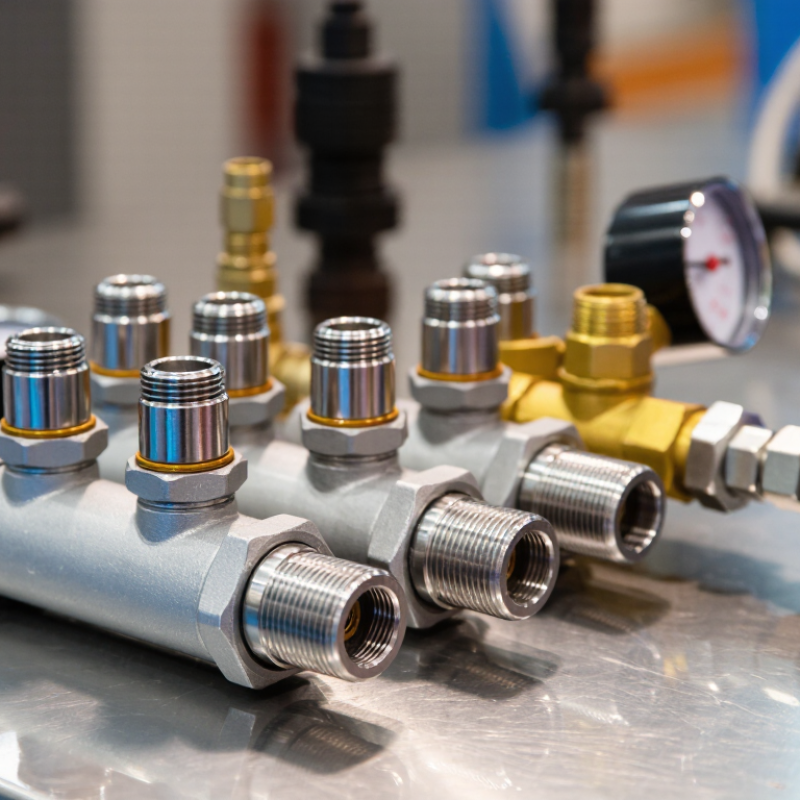
Hydraulic test ports provide access to a system’s pressure without disconnecting major lines. Common designs include threaded ports, flange-mounted ports, and quick-connect test points. Each suits different installation spaces and service routines. A technician can attach a compatible gauge to check operating pressure or compare readings across circuit sections.

Small parts matter.

Test ports appear on mobile equipment, industrial presses, and hydraulic power units. On an excavator, a service point near a pump or valve can help identify pressure changes during troubleshooting. In a factory, accessible ports can make routine checks faster. Placement matters: a port hidden behind a hose may be technically useful but awkward in the field. There is no perfect layout, and real maintenance access is sometimes overlooked during design.

Tips: Confirm thread type, pressure rating, and connector compatibility before installation. Keep protective caps in place to limit dirt entering the fitting. Record measurement conditions, since oil temperature and machine load can affect readings. A simple label can also prevent confusion between nearby test points.

China’s Hydraulic Test Port Manufacturing Landscape

China’s hydraulic test port manufacturing landscape sits within a large, increasingly automated industrial base. China’s National Bureau of Statistics reported that manufacturing value added grew 5.0% in 2023. This signals broad production capacity, not test-port quality. That distinction matters. Grand View Research valued the global hydraulic equipment market at USD 45.6 billion in 2023 and projected 4.3% annual growth through 2030. The report covers a wider equipment market, so it should not be read as a test-port sales forecast.

Factories in this supply chain commonly produce threaded diagnostic fittings, protective caps, and adapter assemblies. Buyers can assess capability through material certificates, thread-gauge records, pressure-test procedures, and batch traceability.

Ask for test conditions, not just a pressure rating: fluid type, temperature, hold time, and leakage criteria affect results. A clean machined seat and consistent thread engagement are small details, but they can prevent leaks during field diagnostics.

Yet catalogue specifications do not reveal process variation. Requesting samples from multiple production batches can expose it. Chinese manufacturing scale is an advantage, but it is not a substitute for documented inspection and repeatable testing.

Leading Chinese Suppliers and Their Product Specialties

Chinese hydraulic test-port suppliers often specialize in different parts of the product range. Some focus on compact diagnostic points that fit into crowded manifolds. Others produce hose-end connections, adapters, protective caps, or complete test assemblies. Their catalogs may cover steel and stainless-steel options, with finishes suited to demanding workshop or outdoor conditions.

Product specialties show up in small details. A supplier with strong machining capability may offer precise thread forms and consistent sealing faces. Another may provide a wider range of pressure ratings or custom connection sizes. Buyers should compare working pressure, temperature limits, seal materials, and thread standards against the actual hydraulic system. Details matter. A fitting that looks correct can still leak if its seat or thread differs.

Ask suppliers for dimensional drawings, material specifications, and test records for the exact part number. Samples can reveal issues that a catalog photo cannot, such as cap fit or wrench clearance. Not every supplier publishes equally complete technical data, and that is worth noting. A polished brochure is not proof of consistent production. Clear answers and repeatable inspection results are more useful indicators of fit.

Quality Standards and Capabilities to Compare Across Suppliers

When comparing hydraulic test port suppliers, start with the operating conditions, not a catalogue photo. Check the stated working and proof pressures, temperature range, and seal materials. These details affect whether a port suits mineral oil, water-glycol fluid, or another specified medium. Confirm the thread standard and dimensions against your manifold or hose assembly. A small mismatch can cause leaks or damage during installation.

Ask how pressure tests are performed and whether results are recorded by production lot. Useful evidence includes material certificates, inspection records, and clear test conditions. A pressure rating without its test method leaves questions. Details matter. Review samples for clean threads, consistent machining, and protective caps that prevent debris entering the port. One sample cannot prove every shipment will match, so check how the supplier controls repeat production.

Manufacturing capacity matters, but so does communication when a drawing changes. Ask about inspection equipment, batch traceability, lead-time planning, and how nonconforming parts are handled. A capable supplier should explain these processes plainly and provide realistic delivery estimates. I would not treat a polished datasheet as proof by itself; documents can omit useful limits. Compare samples, records, and responses together, then decide whether the supplier’s controls fit your application.

How Global Buyers Can Evaluate and Source Test Ports from China

For global buyers, sourcing hydraulic test ports from China should begin with a clear application brief. Specify working and proof pressure, fluid type, temperature range, thread standard, and the available installation space. A port that fits the drawing may still leak if its seal type or surface finish is wrong. Small details matter.

Ask suppliers for dimensional drawings, material specifications, pressure-test procedures, and inspection records tied to the quoted product. Check that thread gauges and sealing features match your requirements; do not rely on photographs alone. Request samples from the intended production process, then test them with your own fittings and fluid where practical. Confirm how batches are identified and how changes to materials or tooling are communicated. Documents help, but they do not replace inspection.

Before placing a larger order, compare lead times, minimum quantities, packaging, and responses to technical questions. A precise answer about tolerances is more useful than a broad promise of quality. Agree on acceptance criteria in writing, including sampling and defect handling. Consider an independent pre-shipment inspection if the order is critical or the supplier is new to your team. Even a thorough checklist can miss something; review fit and sealing again after installation.

China Hydraulic Test Port Supplier Evaluation

Illustrative buyer-planning scorecard: suggested percentage weights for comparing suppliers. These are evaluation priorities, not market survey results.

Request supporting documents for each criterion, including pressure-test records, material specifications, connection and thread details, quality-control traceability, and delivery terms. Adjust the weights to match your application and procurement requirements.

FAQS

What does a hydraulic test port do?

It provides pressure access without disconnecting major hydraulic lines. A compatible gauge can check pressure at a specific point.

What are common test port designs?

Common options include threaded ports, flange-mounted ports, and quick-connect points. Choose one that suits the installation space and service routine.

Where are test ports commonly used?

They appear on mobile equipment, industrial presses, and hydraulic power units. On an excavator, a port near a pump or valve can help locate pressure changes.

What details should buyers confirm before installation?

Check the thread type, pressure rating, seal type, connector compatibility, and available space. A fitting can match a drawing yet still leak.

How can technicians keep readings useful?

Record the machine load and oil temperature with each reading. Keep protective caps fitted to reduce dirt entering the port. Small details matter.

What documents should buyers request from suppliers?

Request dimensional drawings, material specifications, pressure-test procedures, and inspection records for the quoted product. Photos alone are not enough.

How should buyers check samples?

Ask for samples from the intended production process. Where practical, test them using your fittings and fluid. Fit matters.

What should be agreed before a larger order?

Confirm lead times, minimum quantities, packaging, and written acceptance criteria. Specify sampling and defect handling, and consider independent inspection for a critical order.

What can make a test port awkward to maintain?

A port hidden behind a hose may be difficult to reach. Design layouts can overlook real service access, so check placement on the equipment itself.

Conclusion

Hydraulic Test Ports are compact components that allow technicians to connect pressure gauges or diagnostic equipment to hydraulic systems. Available in different configurations to suit system layouts and operating conditions, they support pressure measurement, troubleshooting, and routine maintenance in applications such as industrial machinery, mobile equipment, and power units. China’s manufacturing sector serves a broad range of requirements, from standard test connections to customized designs, with suppliers differing in materials, production capabilities, and product specialization.

Global buyers comparing Chinese suppliers should assess more than price. Key considerations include dimensional accuracy, pressure and temperature ratings, material suitability, sealing performance, manufacturing consistency, and documented quality-control processes. Buyers can also compare testing capabilities, customization options, order quantities, lead times, and communication support. Clear technical specifications, sample evaluation, and confirmation of inspection and packaging requirements can help ensure that selected Hydraulic Test Ports are compatible with the intended system and dependable in service.

Isabella

Isabella

Isabella is a dedicated marketing professional with a sharp focus on driving brand growth and engagement through strategic content creation. With an extensive background in digital marketing, she combines her passion for storytelling with her keen understanding of industry trends to deliver......