 TM Hydraulic
What Are the Best Test Point Adapters from China?
China has become a major sourcing base for electronic test accessories, including Test Point Adapters used in PCB inspection, debugging, and production testing. The opportunity is significant. Grand View Research’s Electronic Test Equipment Market report identifies expanding electronics manufacturing and automation as key market drivers. Its findings support a practical question: which Chinese suppliers can deliver stable contact, repeatable measurements, and dependable service?
The answer requires more than comparing catalog prices. A reliable adapter should match the test point diameter, pitch, probe geometry, current rating, and intended test frequency. IPC standards, including IPC-2221 and IPC-J-STD-001, provide useful references for PCB design and assembly quality. However, these standards do not automatically validate every adapter supplier. Buyers must still review material certificates, contact resistance data, plating specifications, dimensional tolerances, and inspection records.
Small details matter.
For example, a gold-plated spring contact may resist oxidation, while a loose housing can create intermittent readings during repeated cycling. Reports from MarketsandMarkets on automated test equipment also emphasize the growing importance of production efficiency, repeatability, and integration. These priorities make adapter consistency especially important for factories operating ICT, functional testing, or custom fixtures.
Yet no ranking is permanent. Supplier performance can change with tooling updates, subcontracting, or material substitutions. This guide therefore evaluates China-based Test Point Adapters through practical criteria, including engineering experience, customization capability, quality control, export reliability, and after-sales support. The goal is not to promote the cheapest option. It is to identify suppliers that can support accurate testing when every contact matters.
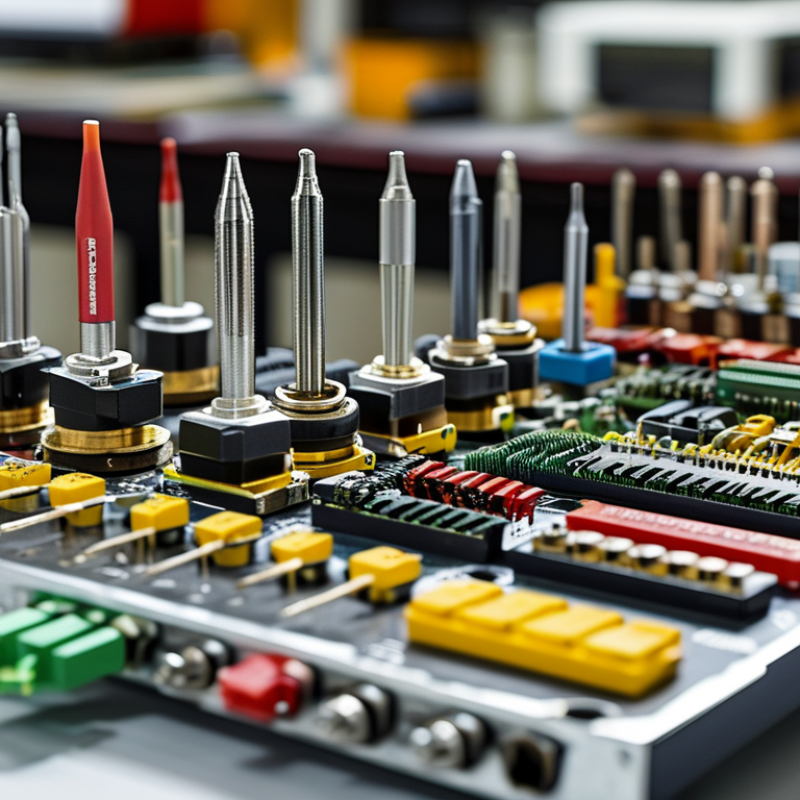
What Are Test Point Adapters and Why Are They Used?
What Are the Best Test Point Adapters from China?
What Are Test Point Adapters and Why Are They Used?
A test point adapter creates a reliable connection between a circuit node and measuring equipment. It may use a spring probe, pogo pin, coaxial connector, or insulated hook. Engineers attach it to exposed pads during voltage, current, signal, or thermal checks. The adapter prevents probe tips from slipping across nearby components. That small detail can protect a crowded prototype board.
According to MarketsandMarkets’ 2024 Test and Measurement Equipment Market report, the sector may grow from about USD 33.4 billion in 2024 to USD 42.4 billion by 2029. Grand View Research also reports continued growth through 2030, with a projected compound annual growth rate above 5%. These figures reflect stronger demand for repeatable electronic testing. Adapters support that demand by reducing setup time and improving measurement consistency. In production, a fixture can contact dozens of test points within seconds.
Chinese suppliers offer many configurations, including custom pitch, cable length, insulation, and probe force. Buyers should request drawings, material data, contact resistance results, and repeated-cycle test records. A low-cost adapter may look suitable. It can still create unstable readings after repeated compression. That assumption needs checking.
For high-frequency work, controlled impedance and shielding matter. For power testing, current capacity and heat resistance matter more. A practical evaluation should include mechanical fit, electrical stability, safety spacing, and replacement availability. ISO 9001 certification helps, but it does not replace sample testing.
What Are the Best Test Point Adapters from China? - What Are Test Point Adapters and Why Are They Used?
Test point adapters provide a temporary or repeatable connection between an electronic test point and measurement equipment such as a multimeter, oscilloscope, logic analyzer, or power analyzer. The most suitable type depends on signal frequency, contact geometry, required electrical loading, and the desired connection method.
| Adapter Type | Typical Connection | Best Measurement Use | Typical Electrical Characteristics | Main Advantages | Important Limitations | Selection Guidance |
|---|---|---|---|---|---|---|
| Spring-Loaded Pogo-Pin Adapter | Compressible pins contact exposed pads, vias, or plated test points. | Repeated board testing, functional testing, and fixture-based production inspection. | Usually passive; contact resistance is commonly specified in milliohms, while current ratings vary by pin construction and size. | Fast engagement, repeatable contact, compact design, and compensation for small height differences. | Requires suitable pad size and contact force; mechanical wear and contamination can affect reliability. | Choose pin travel, tip shape, pitch, and rated current according to the board layout and test-cycle requirements. |
| Insulated Grabber Adapter | A spring-loaded hook clips onto a component lead, header pin, or wire. | Multimeter checks, low-speed debugging, and temporary voltage or continuity measurements. | Normally high-impedance when used with a multimeter or passive probe; electrical performance depends on the attached lead length. | Hands-free probing, insulated jaws, and reduced risk of shorting adjacent conductors. | Long leads add capacitance and inductance, making it unsuitable for many high-speed signals. | Use for low-frequency or DC work; select an insulated, narrow hook when board access is limited. |
| Coaxial Test Point Adapter | A coaxial connector links the test point to a cable, oscilloscope, spectrum analyzer, or network analyzer. | RF, clock, fast digital, pulse, and transmission-line measurements. | May use a controlled 50-ohm signal path; usable bandwidth depends on connector, layout, cable, and adapter construction. | Better shielding, lower susceptibility to external noise, and more predictable high-frequency behavior. | Impedance loading can change circuit behavior; the connector requires adequate PCB space and careful grounding. | Select a 50-ohm path for RF or high-speed systems when the circuit is designed for controlled impedance. |
| Oscilloscope Probe Tip Adapter | A probe tip, ground spring, or socket attaches directly to a test pad or small measurement point. | Waveform, ringing, overshoot, rise-time, and transient analysis. | Common passive probes offer selectable attenuation such as 1× or 10×; input capacitance and grounding method affect bandwidth. | Convenient for bench debugging and compatible with standard oscilloscope probe systems. | A long ground lead can introduce ringing and measurement error, especially on fast edges. | Use a short ground spring or coaxial connection for fast signals; verify probe attenuation settings before measuring. |
| Bed-of-Nails Test Fixture Adapter | Multiple spring probes contact a dedicated array of PCB test pads at the same time. | In-circuit testing, production verification, programming, and automated fault detection. | Supports separate power, ground, analog, and digital contacts; electrical limits depend on the individual probes and fixture wiring. | High throughput, repeatable positioning, and simultaneous access to many test points. | Higher tooling cost, dedicated board layout requirements, and periodic probe replacement. | Best when many identical boards must be tested consistently and the PCB can include dedicated test pads. |
| Terminal-Block Test Adapter | Screw, spring, or pluggable terminals connect test wires to board or control-system points. | Power, industrial control, low-speed analog, and field-wiring measurements. | Current and voltage ratings are determined by terminal size, insulation, spacing, and conductor type. | Secure wiring, clear identification, and suitability for relatively high-current or higher-voltage connections. | Bulkier than probe-style adapters and generally unsuitable for high-frequency waveform measurements. | Check voltage, current, creepage, clearance, wire gauge, and insulation requirements before use. |
| Flying-Lead Test Adapter | Flexible wires terminate in plugs, clips, pins, or probe tips. | Prototype debugging, evaluation boards, development work, and measurements on non-standard layouts. | Electrical performance varies significantly with wire length, conductor arrangement, shielding, and termination. | Flexible, inexpensive, and adaptable to different connector styles and board geometries. | Less repeatable, more vulnerable to electromagnetic interference, and prone to accidental disconnection. | Choose short, clearly labeled leads for general-purpose work and secure unused conductors to prevent shorts. |
FAQS
It connects a circuit point with measuring equipment. It may use a spring probe, pogo pin, coaxial connector, or insulated hook. This connection helps prevent slipping near crowded components.
They improve measurement consistency during voltage, current, signal, or thermal checks. A fixture can contact many points within seconds. That saves setup time.
Compare probe travel, contact force, pitch, current capacity, and voltage rating. Check insulation materials and cable compatibility. A short probe may lose contact inside a deep fixture.
Request drawings, material data, contact-resistance results, and cycle-life records. Ask for traceable inspection reports and tolerance tables. Old templates are not enough.
Measure resistance with a calibrated meter before repeated use. Repeat the measurement after 500 to 1,000 connection cycles. Test several pieces from different cartons. Real samples matter.
Check insulation, spacing, dielectric strength, temperature limits, and rated current. Use recognized safety and material compliance documents. Certificates alone cannot prove every shipment is consistent.
High-frequency testing needs controlled impedance and effective shielding. Power testing needs suitable current capacity and heat resistance. The same adapter may not suit both tasks.
No. A cheaper adapter may develop unstable readings after repeated compression. I once focused too heavily on price. Frequent alignment later delayed production. That mistake still deserves attention.
Conclusion
Test Point Adapters are practical components used to create reliable, accessible connections between test instruments and electronic circuits. They help engineers measure voltage, current, signals, and system performance without repeatedly modifying the device under test. Made in China, these adapters may include spring-loaded probes, socket-style adapters, PCB test connectors, cable assemblies, and customized interface solutions. Each type serves different testing conditions, so compatibility, contact stability, durability, and ease of installation are important considerations.
When comparing Chinese manufacturers, buyers should review production experience, technical capabilities, customization services, inspection procedures, and communication support. Essential quality and safety checks include material consistency, insulation performance, connector strength, dimensional accuracy, and compliance with applicable industry requirements. The best adapter should match the circuit layout, testing frequency, electrical ratings, mechanical environment, and expected service life. By balancing performance, quality control, delivery reliability, and total cost, users can select Test Point Adapters that provide safe, repeatable, and efficient testing results.
