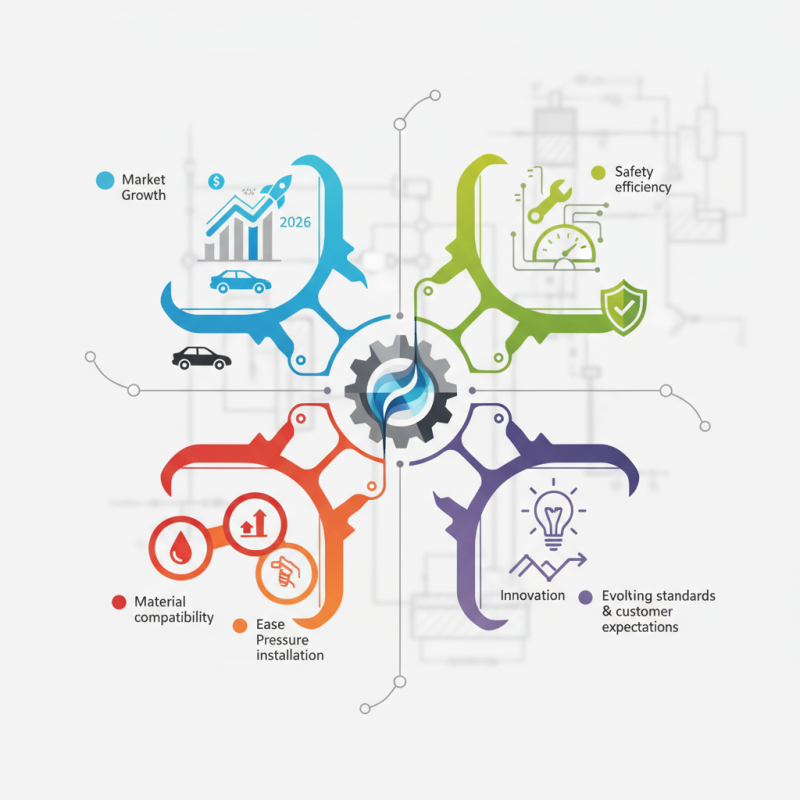
The demand for Hydraulic Test Ports has surged in various industries, reflecting the growing focus on safety and efficiency. According to a recent market analysis by Research and Markets, the global hydraulic testing equipment market is projected to reach $1.5 billion by 2026. This growth is driven by advances in technology and increasing regulatory requirements in sectors like automotive and aerospace.
Hydraulic Test Ports play a crucial role in ensuring the reliability of hydraulic systems. These components facilitate precise measurements and troubleshooting, which are essential for preventing failures. Companies are seeking robust solutions that can handle high pressures and provide accurate readings under various conditions. However, the market is saturated with options, making the procurement process challenging.
While many products claim superior performance, selecting the right Hydraulic Test Port requires attention to detail. Factors like material compatibility, pressure ratings, and ease of installation must be considered. Additionally, evolving standards and customer expectations call for ongoing innovation. Thus, suppliers must remain vigilant and adaptable, ensuring their offerings meet the ever-changing needs of the market.
Hydraulic test ports play a crucial role in modern hydraulic systems. These ports enable technicians to monitor fluid pressure and diagnose system performance. Efficient testing can prevent costly breakdowns and extend machinery life. Their importance is often overlooked until a malfunction occurs, highlighting the necessity for regular inspections.
In the field, precise measurements are critical. Test ports allow for quick access without disrupting the entire system. However, improper use or neglect can lead to inaccurate readings. This can result in misdiagnosis of issues, wasting time and resources. Training personnel to use these ports correctly is essential for optimal results.
Many systems incorporate multiple test ports. Each serves specific functions, suited for different pressures or fluid types. This diversity increases the complexity. In the rush to perform tests, details may be missed, impacting overall efficiency. Continuous learning about advancements in test port design is vital for all professionals in the hydraulic sector. This can lead to more reliable maintenance practices and improved system performance.
When selecting hydraulic test ports, several key features deserve careful consideration. First, assess the port's compatibility with your existing system. Make sure it matches the pressure rating and medium type. This compatibility ensures safety and optimal performance. It can prevent potential leaks or failures during operation, which is crucial for maintaining system integrity.
Another important consideration is the material used in manufacturing the ports. Different applications may require corrosion-resistant materials. Stainless steel is common, but other options may be more suitable for specific environments. Additionally, the design of the port can affect access and usability. Look for designs that offer easy connection and disconnection to facilitate testing.
Finally, consider the size and dimensions of the ports. They should fit within your system's constraints without compromising accessibility. Evaluate whether a standard size works or if custom dimensions are necessary. It's often easy to overlook these details, but they can drastically impact the testing process. Careful attention to these features can lead to improved performance and efficiency in hydraulic systems.
In 2026, the demand for hydraulic test ports continues to rise. Various industries rely on these components for efficiency and safety. Suppliers play a crucial role in meeting global procurement needs. Understanding different suppliers helps in making informed choices.
Top suppliers provide various options, ensuring quality and reliability. They offer a range of materials and designs to fit diverse applications. However, not all suppliers maintain the same standards. It's essential to research their reputations and customer reviews.
While some suppliers shine in product offerings, others may fall short. Flexibility in custom solutions is vital for specific industry requirements. The landscape is competitive, and suppliers must adapt quickly. Considering global perspectives will aid in making better procurement decisions.
The demand for hydraulic test ports is growing globally. Various regions exhibit different preferences and technological advancements. A report by MarketsandMarkets forecasts a significant CAGR of 4.5% in hydraulic components through 2026. This reflects a rising need for robust testing solutions across sectors like construction and manufacturing.
In North America, industries prioritize high-pressure capabilities and modular designs. Reports indicate an increasing focus on automation, specifically in hydraulic testing. European markets, however, lean towards eco-friendly materials, aiming to reduce environmental impact. According to the European Hydraulic Institute, 70% of manufacturers are moving towards more sustainable production options.
Asia-Pacific presents a more diverse landscape. Countries like China emphasize cost-effective solutions, while Japan prioritizes precision engineering. A recent study highlighted that 60% of companies in this region are investing in innovative testing technologies. Yet, challenges arise from quality control issues and inconsistent regional standards. This disparity causes a gap that companies must address to fulfill global procurement needs effectively.
The future of hydraulic test port technology is evolving rapidly. With increasing automation and the push for efficiency, manufacturers are focusing on creating more user-friendly and durable test ports. According to a recent industry report by MarketsandMarkets, the global hydraulic testing equipment market is expected to reach USD 2 billion by 2026. This growth highlights the demand for advanced technology in hydraulic systems.
Innovative materials and designs are pivotal for future trends. Lightweight aluminum and corrosion-resistant coatings are becoming standard. These advancements enhance both longevity and performance. However, not all products meet the same quality standards. Buyers must be cautious when assessing new options.
Tips: Regularly check for certifications and industry standards before making a procurement decision. Ensure the test ports align with your specific application needs.
Furthermore, integration with IoT technology is on the rise. Remote monitoring capabilities can lead to more accurate readings. Yet, the challenge remains. Many existing systems struggle to incorporate these technologies efficiently. It's crucial to evaluate your current setup for compatibility.
Tips: Conduct a thorough analysis of your hydraulic system before implementing new technologies. This can prevent costly setbacks and improve overall functionality.
| Test Port Type | Pressure Rating (psi) | Material | Operating Temperature (°C) | Industry Application |
|---|---|---|---|---|
| Standard Hydraulic Test Port | 5000 | Carbon Steel | -40 to 150 | Manufacturing |
| Heavy-Duty Test Port | 10000 | Stainless Steel | -20 to 200 | Construction |
| Compact Test Port | 3000 | Brass | -30 to 100 | Automotive |
| High-Flow Test Port | 8000 | Aluminum | -40 to 180 | Oil & Gas |
| Remote Test Port | 6000 | Plastic Composite | -10 to 120 | Aerospace |
: Hydraulic test ports allow technicians to monitor fluid pressure and diagnose system performance efficiently.
Regular inspections help prevent costly breakdowns and extend the life of machinery. Often, this need is overlooked.
Neglect or misuse can lead to inaccurate readings, resulting in misdiagnosis and wasted time or resources.
No, many systems include multiple test ports, each designed for specific functions and fluid types, adding complexity.
Automation and user-friendly designs are emerging trends, with a focus on durable, lightweight materials.
Buyers need to check for certifications and ensure the test ports align with their specific application needs.
IoT integration offers remote monitoring but poses compatibility challenges for existing systems that may struggle with new tech.
Quality control issues and inconsistent regional standards create challenges companies must address for global procurement.
Proper training ensures optimal use of test ports, which is vital for accurate measurements and efficient operations.
Failing to conduct a thorough system analysis can lead to costly setbacks and negatively impact overall functionality.
The article titled "2026 Best Hydraulic Test Ports for Global Procurement Needs" provides a comprehensive overview of hydraulic test ports, emphasizing their essential functions and significance in various applications. It outlines key features to consider when selecting hydraulic test ports, such as durability, compatibility, and ease of installation, which are crucial for ensuring optimal performance in hydraulic systems.
Furthermore, the article highlights top global suppliers of hydraulic test ports in 2026 and offers a comparative analysis of these ports across different regions, showcasing variations in technology and design. Finally, the discussion on future trends in hydraulic test port technology indicates a shift towards more advanced, efficient, and user-friendly solutions, catering to the evolving needs of global procurement. This insight is invaluable for industry stakeholders aiming to make informed decisions regarding hydraulic test ports.

TM Hydraulic