Choosing a Pressure Test Hose for global sourcing involves more than comparing price, length, and working pressure. A hose may look identical across supplier catalogs, yet its reinforcement, cover compound, fittings, and testing records can differ significantly. This guide examines seven practical options for demanding applications, including hydraulic maintenance, industrial equipment, water systems, and controlled pressure testing.
Hydraulic hose specialist John M. Bennett once observed, “A pressure hose earns trust through verified performance, not appearance.” That principle remains useful when reviewing suppliers across different regions. Buyers should examine burst pressure, minimum bend radius, temperature range, connection design, impulse resistance, and compatibility with the test medium. Clear markings matter. So do batch certificates, inspection reports, and traceable production records.
Small details matter.
A credible manufacturer should explain how each hose is assembled, cleaned, and pressure-tested before shipment. Independent certification can strengthen confidence, but certification alone does not guarantee a suitable product. The correct hose must match the equipment, pressure cycle, environment, and operator needs. This is where sourcing decisions become less tidy. A lower-priced hose may reduce procurement costs, yet create delays through leakage, premature wear, or incompatible fittings.
The seven selections in this overview are not universal winners. They represent different balances of safety, durability, flexibility, availability, and cost. Some may suit frequent field testing, while others perform better in controlled industrial environments. Specifications can also change between production batches, so buyers should confirm current documentation directly with the supplier before ordering. A careful shortlist is valuable. A careful verification process is better.
A suitable pressure test hose must survive its intended pressure, not merely display a high maximum number. In sourcing work, I compare working pressure, burst pressure, temperature range, and safety factor. The hose should match the test medium, whether hydraulic oil, water, or air. Material compatibility helps prevent swelling, cracking, and contamination. Fit matters too.
Thread standards and end fittings deserve careful checking. A metric port may look similar to an imperial port, yet sealing can fail under load. Suppliers should provide dimensional drawings, tolerance data, and clear assembly instructions. This is practical evidence, not sales language.
Global sourcing adds another layer. I look for batch identification, inspection records, pressure-test certificates, and consistent labeling on every coil or assembly. Packaging should protect fittings from dust, moisture, and impact during long transport. Small details travel far. Documentation should state hose length, inner diameter, reinforcement, rated temperature, and connection type. If those fields are missing, comparing quotations becomes guesswork.
Samples should be tested under realistic conditions before a large purchase. I prefer staged pressure checks, visual inspection, and repeated bending where the application demands it. A supplier may pass a static test but still overlook flexibility or fatigue. I have made that mistake by trusting a neat specification sheet too quickly. The better question is whether the hose remains predictable after installation, storage, and repeated use. Local technical support, replacement availability, and traceable quality control also reduce sourcing risk across borders.
7 Best Pressure Test Hoses for Global Sourcing?
Seven Pressure Test Hose Types and Their Core Applications
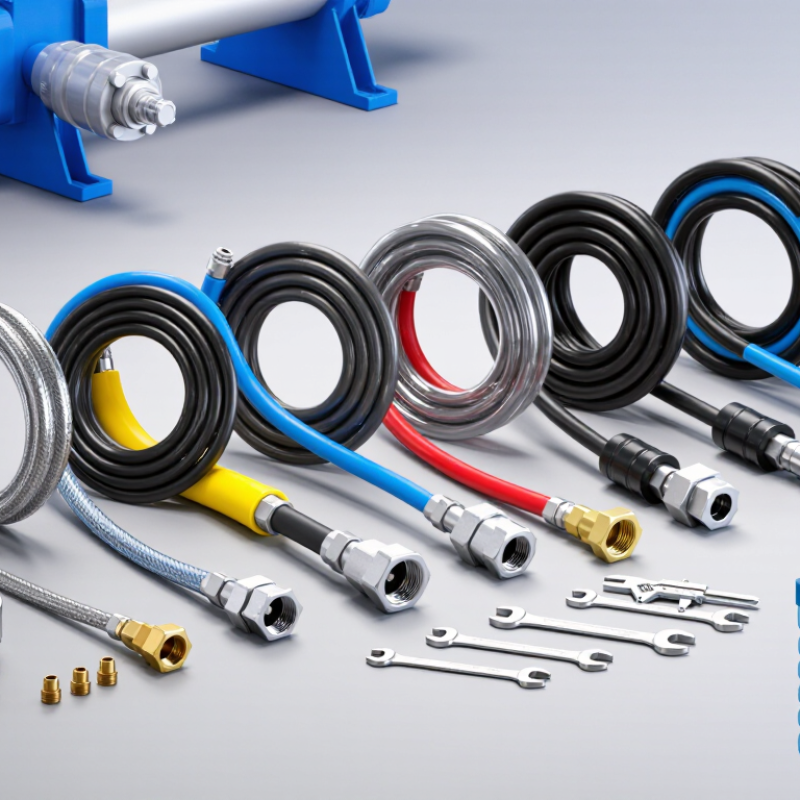
Choosing a pressure test hose starts with the testing medium, working pressure, and temperature. Thermoplastic hoses suit hydraulic pressure testing because they are light, flexible, and easy to handle around compact equipment. Rubber hoses tolerate vibration well and work effectively with water or hydraulic oil. PTFE hoses are useful when chemical resistance and clean fluid transfer matter. They also perform reliably across wide temperature ranges.
Stainless-steel braided hoses provide strong protection against pressure surges and external abrasion. They are common near pumps, manifolds, and fixed test benches. Air hoses support pneumatic testing, but their fittings must match the gas service and pressure rating precisely. Water-blast hoses handle high-pressure water cleaning and testing applications, where surface damage is a serious concern. Composite hoses serve selected chemical or fuel-related testing duties, especially when flexibility and layered protection are needed.
A hose rating is not enough. Check burst pressure, bend radius, end connections, temperature limits, and impulse-cycle data. Traceable inspection records improve sourcing confidence across borders. I once underestimated fitting alignment; the hose passed its pressure rating but strained during installation. That mistake changed our inspection checklist. No hose is perfect. A practical supplier should explain limitations, not only advertise maximum pressure. Test samples under realistic conditions before approving a large order.
| No. | Pressure Test Hose Type | Typical Construction | Typical Working Pressure Range* | Typical Temperature Range* | Core Applications | Main Advantages | Key Sourcing Checks |
|---|---|---|---|---|---|---|---|
| 1 | Thermoplastic Hydraulic Test Hose | Polyester or aramid reinforcement with a thermoplastic inner tube and cover | Approximately 400–700 bar (5,800–10,150 psi) | Approximately −40°C to +100°C, depending on compound | Hydraulic pressure testing, calibration lines, instrumentation, and portable test equipment | Lightweight, small bending radius, low fluid absorption, and good handling | Confirm burst-to-working-pressure ratio, fluid compatibility, minimum bend radius, and end-fitting crimp quality |
| 2 | Single Wire-Braid Hydraulic Hose | Oil-resistant synthetic rubber tube with one braided high-tensile steel-wire reinforcement | Approximately 100–350 bar (1,450–5,075 psi) | Approximately −40°C to +100°C; some covers support higher temperatures intermittently | General hydraulic circuits, pressure gauges, pumps, valves, and medium-pressure test rigs | Flexible, widely available, and suitable for many petroleum-based hydraulic fluids | Check applicable hose standards, cover resistance, impulse performance, fitting compatibility, and assembly traceability |
| 3 | Two-Wire-Braid Hydraulic Hose | Synthetic rubber tube with two braided steel-wire reinforcement layers | Approximately 200–420 bar (2,900–6,090 psi) | Approximately −40°C to +100°C | High-pressure hydraulic testing, mobile equipment, power units, and repeated pressure cycling | Higher pressure capability and improved resistance to impulse and mechanical damage than single-braid hose | Verify pressure ratings at the selected diameter, bend radius, abrasion cover, and fitting assembly procedure |
| 4 | Ultra-High-Pressure Thermoplastic Hose | High-strength fiber reinforcement with a compact thermoplastic core and protective outer cover | Approximately 700–2,800 bar (10,150–40,600 psi) | Commonly approximately −40°C to +60°C, depending on design | Hydrostatic testing, bolt tensioning, hydraulic nut systems, pressure intensifiers, and specialized test benches | Very high pressure capacity with lower weight and easier routing than many steel-pipe assemblies | Require documented proof testing, safety factor, hose-end protection, anti-whip restraints, and operator shielding |
| 5 | Water-Blasting and Hydrostatic-Test Hose | Synthetic rubber or thermoplastic tube reinforced with textile or steel wire, with a wear-resistant cover | Approximately 200–1,000 bar (2,900–14,500 psi), depending on service category | Typically approximately 0°C to +60°C for water service | Pipeline, vessel, boiler, heat-exchanger, and pressure-vessel hydrotesting; water-jet cleaning | Designed for water-based media, frequent handling, and resistance to abrasion and kinking | Confirm water quality, pressure-pulsation rating, hose length, safety restraints, and compatibility with cleaning chemicals |
| 6 | PTFE-Lined Stainless-Steel-Braided Hose | Seamless or convoluted PTFE tube with one or more stainless-steel braid layers | Approximately 100–350 bar (1,450–5,075 psi), varying by bore and braid | Approximately −60°C to +260°C; pressure capability decreases at elevated temperature | Chemical, gas, hydraulic, laboratory, and high-temperature pressure testing | Excellent chemical resistance, low friction, low permeability, and broad temperature capability | Check permeation, electrostatic requirements, vacuum capability, braid material, bend limits, and media compatibility |
| 7 | Composite Chemical and Fuel-Test Hose | Multiple polymer films and fabrics reinforced with spiraled synthetic or metallic wires | Approximately 10–50 bar (145–725 psi), depending on construction and diameter | Approximately −30°C to +100°C, depending on chemical service | Fuel, solvent, corrosive-liquid, and chemical transfer or pressure testing where flexibility is important | Lightweight, flexible, electrically bondable in suitable designs, and available with chemical-resistant liners | Request a chemical-resistance chart, permeation data, electrical continuity requirements, grounding method, and sanitation approvals where applicable |
*Pressure and temperature values are representative industry ranges rather than universal ratings. Actual limits depend on internal diameter, reinforcement, hose length, fluid, temperature, impulse cycles, fittings, and applicable standards. Always use the supplier’s certified working pressure and safety instructions for the complete hose assembly.
Global sourcing starts with the pressure rating, not the catalog price. A hose marked 10,000 psi may withstand that pressure only under specified temperature, fluid, and impulse conditions. Compare working pressure, proof pressure, and burst pressure separately. ISO 1402 defines hydrostatic test methods for hose assemblies, while ISO 18752 classifies hydraulic hoses by pressure and impulse performance. These standards help, but certificates still require verification.
Material choice changes service life. Synthetic rubber handles many hydraulic fluids and repeated flexing. Thermoplastic hose offers a lighter assembly and often better chemical resistance. Stainless-steel reinforcement suits demanding temperature and corrosion conditions, but it can become less flexible. Grand View Research estimated the global hydraulic hose market at about USD 2.5 billion in 2023, with growth projected near 4.7% annually through 2030. That expansion increases supplier variety, not necessarily quality.
Connection standards deserve equal attention. Check JIC, ORFS, BSP, and metric fittings against the equipment drawing, thread pitch, sealing surface, and pressure rating. Never match threads by appearance alone. SAE J517 and EN 853 provide useful performance references, yet local assembly practices may differ. I record temperature, minimum bend radius, test medium, and impulse cycles during supplier audits. My checklist is not perfect. I still recheck port dimensions with gauges, because one small mismatch can cause leakage, downtime, or an expensive rejected shipment.
When comparing the 7 best pressure test hoses for global sourcing, buyers should verify performance beyond a polished product sheet. Confirm the working pressure, burst pressure, impulse rating, temperature range, and minimum bend radius. Check fluid compatibility too. A hose may handle water but fail quickly with oil, chemicals, or hot media.
Ask for batch-level records, not generic certificates. The supplier should provide material declarations, dimensional reports, pressure-test results, and a certificate of conformity. Verify whether testing follows recognized standards, such as ISO 1402, SAE J517, or relevant regional specifications. Check the laboratory’s accreditation and the certificate’s scope. An impressive logo proves little.
Inspect samples before shipment. Look for clean crimping, even cover thickness, readable markings, sealed ends, and undamaged fittings. Confirm that markings match the purchase order and test report. Use hydrostatic testing where appropriate, rather than compressed air, which stores more dangerous energy. Request traceability from raw material to finished batch. Keep retained samples for future comparison.
Documents can look perfect while samples fail. That uncomfortable possibility deserves attention. A supplier audit should include production controls, calibration records, nonconformance handling, and worker training. Buyers should also repeat independent testing on high-risk batches. I would not rely on one successful test. Field vibration, sharp bends, and heat often reveal weaknesses that factory checks miss.
Global sourcing should begin with application risk, not the lowest quotation. The seven practical hose categories include hydraulic wire-braid, thermoplastic, PTFE-lined, stainless-steel braided, rubber air-and-water, chemical composite, and high-temperature silicone hoses. Each requires a verified working pressure, burst pressure, temperature range, bend radius, and fluid-compatibility statement. Select suppliers against recognized requirements, such as ISO 18752, SAE J517, or EN 853, where applicable. Request batch traceability and pressure-test records. Photos are not evidence.
Supplier reliability must be measured before negotiation. Audit material certificates, crimping controls, calibration records, and nonconformance procedures. ISO 9001:2015 emphasizes controlled processes and documented evidence. McKinsey’s 2020 supply-chain survey found that 73% of companies experienced supplier problems during disruption. That figure makes backup capacity more than a theoretical concern. Ask whether a second facility can produce the same hose construction. Test samples from both locations. Small details matter, including labeling that survives moisture and cartons that prevent connector damage.
Total sourcing cost includes more than unit price. Add tooling, laboratory testing, inspection, freight, duties, insurance, inventory, rejected goods, and downtime. The World Bank’s 2023 Logistics Performance Index assesses customs, infrastructure, tracking, and delivery timeliness; these factors affect landed cost directly. A low-cost supplier with inconsistent transit can become expensive quickly. Use a landed-cost worksheet for every supplier. Include currency movement and emergency shipping. It is easy to underestimate failure costs. I would also challenge my own assumptions: a thicker hose may last longer, but it may increase handling, storage, and installation expenses. Sample testing should precede volume orders.
It should safely handle working pressure, burst pressure, temperature, and repeated use. A high maximum number alone proves little. Check the safety factor and test medium.
Confirm compatibility with hydraulic oil, water, or air. Incorrect materials may swell, crack, or contaminate the medium. The wrong match fails quietly.
Thermoplastic hoses are light and flexible for hydraulic testing. Rubber hoses handle vibration and suit water or hydraulic oil. PTFE supports clean transfer and chemical resistance. Braided metal hoses resist abrasion and pressure surges.
Check thread standards, end connections, dimensions, and alignment. Metric and imperial threads may look almost identical. They can still leak under load. Request drawings, tolerances, and assembly instructions.
Request batch identification, inspection records, and pressure-test certificates. Specifications should list length, inner diameter, reinforcement, temperature, and connection type. Clear labeling supports traceability during transport and installation. Missing fields make quotation comparisons unreliable.
Test samples at realistic pressure, temperature, and bending conditions. Use staged pressure checks and visual inspection. Repeat bending when the application requires flexibility. A static test may miss fatigue problems.
Packaging should protect fittings from dust, moisture, and impact. Long transport can damage exposed threads or connectors. Inspect each coil or assembly after arrival. Small details matter.
Check bend radius, impulse-cycle data, replacement availability, and local technical support. The hose should remain predictable after storage and installation. I once trusted a neat specification sheet too quickly. That mistake changed our inspection checklist.
Selecting the right Pressure Test Hose for global sourcing requires more than comparing prices. Buyers should first match the hose type to its intended application, working medium, pressure range, temperature, flexibility, and required connection standard. Common options may include hydraulic test hoses, thermoplastic hoses, stainless steel braided hoses, high-temperature hoses, chemical-resistant hoses, and compact diagnostic hoses, each suited to different testing environments. Material compatibility, burst pressure, bend radius, and sealing performance are essential factors when comparing products from different markets.
Before placing an order, buyers should verify pressure ratings, dimensional accuracy, traceability, inspection records, and relevant quality or safety certifications. Supplier reliability should be assessed through production capability, sample testing, communication, lead times, packaging, and after-sales support. Total sourcing cost should include tooling, testing, freight, duties, replacement rates, and potential downtime—not just the purchase price. A structured evaluation process helps buyers choose a dependable Pressure Test Hose while reducing safety risks, quality problems, and long-term procurement expenses.

TM Hydraulic