The 2026 market for Hydraulic Test Coupling products is becoming more demanding. Buyers now expect reliable sealing, repeatable connections, and clear technical documentation. A coupling may look small, yet one leaking connection can contaminate a test bench, distort pressure readings, or stop production for hours.
Hydraulic systems researcher Dr. John Watton has emphasized, “Reliable hydraulic control begins with disciplined measurement and careful component selection.” That principle remains practical. A strong Hydraulic Test Coupling should withstand repeated connection cycles, pressure pulses, vibration, and temperature changes. Its body material, valve design, thread accuracy, and seal compound all matter. So does the supplier’s testing process.
Small details matter.
This guide examines the 2026 best Hydraulic Test Coupling manufacturers and suppliers through an engineering-focused lens. It considers product range, pressure ratings, material quality, dimensional consistency, customization, delivery capability, and after-sales support. It also looks beyond catalog claims. Factory inspection records, traceable test data, and field experience often reveal more than polished marketing language.
Some rankings may remain debatable. Performance depends on application conditions, not reputation alone. A coupling suitable for a clean laboratory circuit may fail in a dusty mobile-hydraulic environment. Readers should verify port standards, operating pressure, media compatibility, and temperature limits before purchasing. That extra check can feel inconvenient. It is still cheaper than replacing damaged hoses, instruments, or test equipment. This introduction sets the context for comparing dependable suppliers, while recognizing that no manufacturer is ideal for every hydraulic testing application.
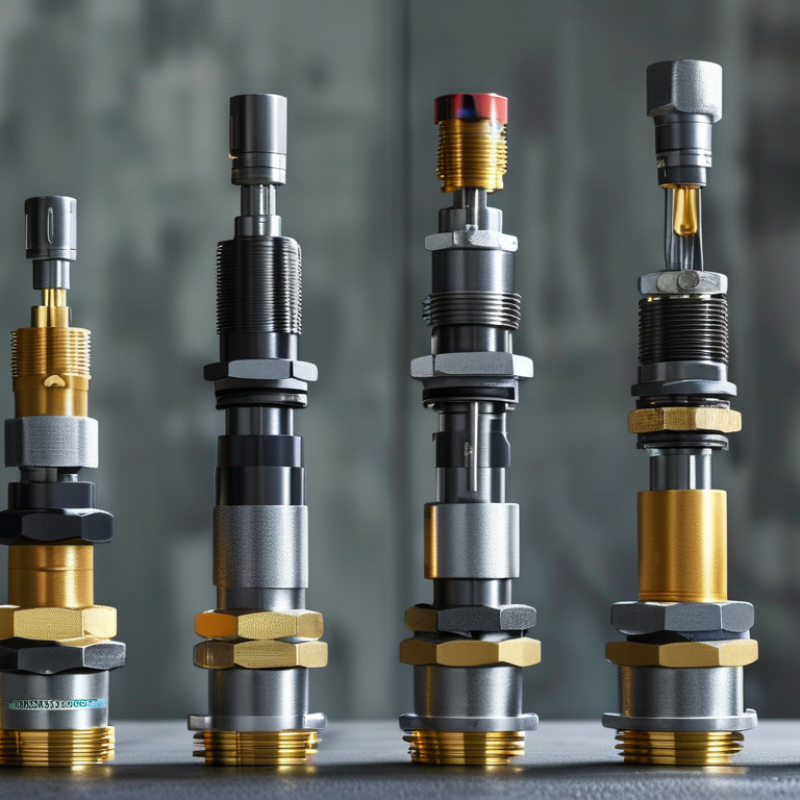
What Are Hydraulic Test Couplings and How Do They Work?
Hydraulic test couplings are compact service connectors used to measure pressure, diagnose faults, and monitor hydraulic circuits. They connect a pressure gauge or sensor without dismantling the hose. Most designs use a spring-loaded poppet or ball valve. When the probe enters, the valve opens and allows fluid to reach the measuring instrument. When the probe is removed, it closes automatically.
Flat-face versions reduce fluid loss and air entry during connection. This matters in excavators, injection machines, presses, and mobile power units. ISO 15171-2 specifies dimensions and performance requirements for diagnostic test couplings. ISO 4413 also emphasizes safe pressure release, clean connections, and controlled maintenance procedures. A loose fitting can create a false reading or a dangerous fluid jet. Keep the port clean.
Industry demand supports closer monitoring.
Grand View Research estimated the global hydraulic equipment market at approximately US$44 billion in 2023, with continued growth expected through 2030. MarketsandMarkets has also forecast steady expansion in hydraulic equipment, driven partly by predictive maintenance and industrial automation. These figures do not measure test couplings directly, but they show why diagnostic access is becoming more valuable.
In field inspections, technicians should match coupling pressure ratings, thread forms, seal materials, and fluid compatibility. Readings can drift when hoses are long or gauges respond slowly. That is where judgment matters. A coupling is small, but installation errors remain common.
Key Features and Standards of Hydraulic Test Couplings
Hydraulic test couplings provide controlled access to pressure circuits without removing hoses or opening reservoirs. In field inspections, technicians often connect a calibrated gauge through a small test point. The connection should be quick, secure, and resistant to accidental release. Self-sealing valves help reduce fluid loss and air entry. Protective caps keep dust away from the sealing surface.
Key features include a suitable pressure rating, compatible materials, and stable performance across the operating temperature range. Couplings should match the system’s fluid, thread form, and connection size. ISO 15171-1 is a useful reference for hydraulic test point interfaces, but buyers must verify the exact application and regional requirements. Pressure ratings should include a practical safety margin, not only match normal working pressure. A coupling that feels strong may still fail under vibration.
Check for leakage.
Reliable suppliers should provide pressure, temperature, material, and dimensional data with traceable test records. Factory inspection may include pressure holding, leak testing, thread checks, and surface inspection. During installation, clean the port, use the specified sealing method, and avoid excessive tightening. Contamination is often the quiet cause of valve damage. No coupling is perfect. Even a compliant part can perform poorly when the port is damaged or the gauge is inaccurate. Periodic inspection should examine caps, seals, corrosion, and connection wear. Replace questionable components before readings become misleading.
Top Hydraulic Test Coupling Manufacturers and Suppliers in 2026
Top Hydraulic Test Coupling Manufacturers and Suppliers in 2026 are being judged by measurable performance, not catalog size. Grand View Research estimates the global hydraulic equipment market will expand at roughly 4.8% annually through 2030. This growth increases demand for test couplings that support faster diagnostics, safer pressure checks, and cleaner maintenance routines.
Reliable manufacturers now design couplings around ISO 7241 and ISO 16028 requirements, depending on the connection type and application. Buyers should examine working pressure, burst pressure, flow restriction, leakage rate, and material compatibility. A coupling rated for 10,000 psi may still perform poorly if its seal compound hardens under heat. Small details matter.
Field experience also shows that supplier quality control can vary between production batches. That point is easy to overlook. A 2024 MarketsandMarkets analysis identified predictive maintenance as a major growth driver across industrial hydraulics. Test couplings support this shift by enabling pressure readings without dismantling lines. The strongest suppliers provide traceable material certificates, calibrated test data, replacement seals, and clear installation instructions. They should also explain performance at low temperatures, repeated connection cycles, and contaminated environments.
Some purchasing teams focus too heavily on price. That can be a costly mistake. Coupling geometry, dust protection, operator access, and hose movement often influence service life more than the initial quotation. Independent testing remains valuable, because published figures may not reflect vibration, side loading, or real workshop conditions.
How to Compare Hydraulic Test Coupling Manufacturers
When comparing hydraulic test coupling manufacturers in 2026, start with field evidence, not polished catalogs. Ask for pressure ratings, impulse-cycle data, and temperature limits. A coupling rated for 10,000 psi may perform differently under repeated pulses. Request test conditions, not only headline figures. Good suppliers explain how results were measured. They should also identify compatible fluids, seal materials, thread standards, and contamination controls.
Inspect manufacturing quality through traceable documents. Look for material certificates, dimensional inspection records, and batch identification on each shipment. Relevant quality systems matter, but certificates alone prove little. Ask how the manufacturer handles failed inspections and customer complaints. A reliable technical team should answer with drawings, tolerance data, and practical installation guidance. Response speed also reveals service capacity.
Request representative samples before approving a large order. Check connection feel, protective caps, leakage after cycling, and disconnection force with gloves. I once focused too heavily on price and overlooked difficult cleaning around the valve area. That mistake increased maintenance time. It also showed why user experience matters more than a spreadsheet score. Compare warranty terms, replacement lead times, customization limits, and training support. Avoid suppliers that promise universal compatibility without verification. Small details often decide reliability.
2026 Best Hydraulic Test Coupling Manufacturers and Suppliers — How to Compare Hydraulic Test Coupling Manufacturers
Use pressure capability as a first screening criterion when comparing hydraulic test couplings. The chart shows common hydraulic reference pressure points with their exact approximate psi equivalents. These are engineering reference values, not company or product ratings.
How to compare suppliers: Confirm the coupling’s rated working pressure, pressure-test safety margin, connection standard, sealing material, operating temperature range, leakage performance, and compatibility with the intended hydraulic fluid. Always verify the manufacturer’s technical datasheet before selection.
Selection Criteria for Quality, Compatibility, and Service
Choosing a hydraulic test coupling manufacturer requires more than comparing prices. Grand View Research estimated the global hydraulic equipment market at approximately USD 49.7 billion in 2023, with continued growth expected through 2030. That expansion increases supplier choices, but it also increases quality risks. Look for documented testing, traceable materials, and pressure ratings supported by independent laboratory evidence. Couplings should meet relevant requirements in ISO 15171-2 for diagnostic connections and match the system’s working pressure, temperature, and fluid type. A coupling rated for 400 bar may still fail early when exposed to pressure spikes, vibration, or contaminated oil. Small details matter. Check thread profiles, sealing materials, dust protection, and connection geometry before ordering.
Compatibility should be verified with real equipment, not only catalog drawings. Ask suppliers for dimensional tolerances, leakage data, impulse-test results, and samples for field trials. The ISO 4413 hydraulic safety standard also emphasizes controlled energy, cleanliness, and safe maintenance practices. Those points affect coupling performance directly. Service quality deserves equal attention. A reliable supplier should provide clear installation instructions, replacement seals, technical response times, and stable batch records. Industry experience shows that a coupling can fit perfectly yet create downtime when spare parts are unavailable. That weakness is often overlooked. I would also review warranty exclusions carefully, because some suppliers hide contamination-related failures in fine print. One practical test is simple: connect and disconnect the coupling repeatedly with gloved hands, then inspect for leakage, surface damage, and awkward access. Performance on paper is not always performance in the field.
FAQS
: Request working pressure, burst pressure, temperature limits, and impulse-cycle results. Paper ratings can mislead. Ask for test conditions and measurement methods.
Repeated pressure pulses can weaken a coupling, even below its rated pressure. Check cycle count, pulse range, fluid temperature, and failure criteria.
Compare thread profiles, sealing materials, fluid types, temperature ranges, and connection dimensions. Confirm compatibility with real equipment, not only catalog drawings.
Request material certificates, dimensional inspection records, batch numbers, and leakage-test results. Certificates alone prove little. Ask how failed inspections are handled.
Yes. Connect and disconnect samples repeatedly with gloved hands. Check leakage, valve damage, protective caps, cleaning access, and disconnection force.
Difficult access, stiff connections, trapped dirt, and damaged seals can increase maintenance time. Fit is not enough. Small details affect uptime.
Ask about installation drawings, tolerance data, replacement seals, response times, training, and spare-part availability. Fast replies may reveal stronger support capacity.
Examine exclusions involving contamination, incorrect installation, fluid incompatibility, and pressure spikes. I once focused too heavily on price and missed cleaning problems.
Use field samples, test evidence, service records, delivery times, warranty terms, and total maintenance effort. A spreadsheet may still miss awkward handling.
Conclusion
This guide explains what a Hydraulic Test Coupling is and how it supports safe, efficient pressure testing, monitoring, and troubleshooting in hydraulic systems. It describes the coupling’s basic working principle, including how test points connect instruments to fluid lines while helping minimize leakage, contamination, and system downtime. The article also reviews essential features such as pressure and temperature ratings, sealing performance, material durability, connection types, compact design, and compliance with relevant industry standards.
It then presents practical methods for evaluating Hydraulic Test Coupling manufacturers and suppliers in 2026 without relying on brand names. Key comparison factors include product consistency, engineering capability, testing procedures, customization options, delivery reliability, technical support, documentation, and after-sales service. The final selection should be based on verified quality, system compatibility, operating conditions, installation requirements, long-term durability, and total ownership value, helping buyers choose dependable solutions for demanding hydraulic applications.
 TM Hydraulic
